Protecting Your Heart, Mind, Body, and Soul

The Hidden Layers of Intimacy — and Why They Matter for Your Future

By: Dr. Mary Nochimson

Physical intimacy is often discussed in terms of chemistry, attraction, and consent. And those things matter….But there is a deeper conversation most people were never taught to have — even with themselves.

Because sex is not just physical.

It is neurological.
It is emotional.
It is energetic.
It is subconscious.

And even when intimacy is mutual, respectful, and consensual… it still creates imprints in your body and mind.

Understanding those imprints isn’t about fear.
It’s about awareness.
It’s about protecting the parts of you that continue living long after the moment ends.

Let’s talk about what actually happens — through the lens of the nervous system, subconscious mind, and energetic body.


The Nervous System Remembers What the Mind Minimizes

During intimacy, your nervous system shifts into a powerful state of openness and receptivity.

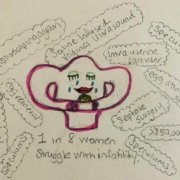
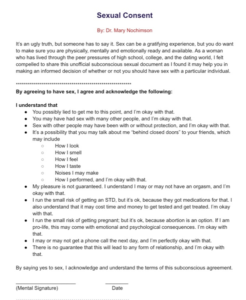
Hormones such as oxytocin, dopamine, and vasopressin increase bonding, emotional encoding, “SUBCONSCOUS Sexual Consent” by Dr. Mary Nochimson that reads like a brutally honest mental contract for sex. It lists real-world risks people often ignore — emotional fallout, being talked about afterward, no guaranteed pleasure, possible STDs, pregnancy, no relationship, and possible ghosting. The document ends with a signature line, framing sex as a conscious decision with physical, emotional, and psychological consequences.and memory consolidation. This is not accidental — the human body is biologically designed to form connection through intimacy.


Even if your logical mind says:
“This is casual.”
“This doesn’t mean anything.”
“I’m fine.”

Your nervous system may still register:
Attachment
Vulnerability
Safety or unsafety
Acceptance or rejection

This is why people sometimes feel lingering emotional responses that seem confusing or disproportionate. The body is not confused — it is recording.

From a craniosacral perspective, moments of heightened emotional or physical intensity can create subtle tension patterns in the fascia, fluid rhythm, and nervous system regulation. These patterns can remain stored until the body feels safe enough to release them.

Your body is not “being dramatic.” It is integrating experience.


Craniosacral Therapy and Somatic Imprints of Intimacy

Craniosacral therapy teaches us that the body holds experience in layered ways — not just through conscious memory, but through tissue memory, fluid motion, and nervous system tone.

Intimate experiences — especially those involving vulnerability, anticipation, emotional hope, or disappointment — can create subtle protective responses such as:

• holding tension patterns in the pelvis or diaphragm
• shifts in breath rhythm
• guarded in her heart or verbal expression
• nervous system hyper-alertness or withdrawal

Even when the experience is positive, the body still integrates the emotional meaning attached to it.

Some individuals notice after relationships or sexual experiences:

• difficulty relaxing in future intimacy
• emotional numbness or over-attachment
• repetitive dating patterns
• subconscious guarding or hyper-vigilance
• feeling “closed off” or “over-open”

These are not personality flaws.
They are adaptive responses stored in the subconscious software and the nervous system hardware.

Craniosacral work helps the body safely release held tension, reorganize fluid rhythm, and restore a sense of internal safety — allowing past experiences to settle rather than silently shaping future ones.


The Subconscious Mind: Hypnotherapy and Emotional Encoding

Your subconscious mind does not evaluate intimacy the way your conscious mind does.

It encodes:
How you felt
What you expected
What happened afterward
What meaning you assigned

If intimacy is followed by rejection, confusion, or emotional disconnection, the subconscious may form protective beliefs such as:

“I shouldn’t trust easily.”
“I have to perform to be valued.”
“Connection doesn’t last.”
“I must give more to receive love.”

These beliefs don’t announce themselves.
They quietly shape attraction, choice of partners, boundaries, and relationship expectations.

Hypnotherapy helps identify and reframe these subconscious associations. It allows the mind to release outdated emotional programming and restore alignment between what you consciously want and what you subconsciously expect.

Without that alignment, people often repeat relational patterns — not because they choose them, but because their nervous system recognizes them.

Familiarity can feel like chemistry.


The Energetic Dimension: Chakras and Intimate Exchange

Across many healing traditions, intimacy is understood as an energetic exchange — not just a physical interaction.

Whether you view chakras symbolically, psychologically, or energetically, they offer a meaningful framework for understanding how intimacy affects different layers of self.

Sacral Chakra — Connection and Emotional Flow

Intimacy activates the center associated with bonding, pleasure, and relational exchange. Repeated emotional merging without clarity can lead to emotional overwhelm, dependency, or disconnection from personal needs.

Heart Chakra — Attachment and Vulnerability

Opening physically often opens emotionally. If the heart repeatedly opens without safety or reciprocity, people may begin to guard, numb, or over-attach in future relationships.

Solar Plexus — Self-Worth and Boundaries

When intimacy happens without full inner alignment, individuals may override personal intuition or values. Over time, this can weaken self-trust or create confusion about personal desires.

Root Chakra — Safety and Security

The body’s foundation of safety is deeply involved in physical closeness. Experiences that feel uncertain, pressured, or emotionally unstable can subtly shift the nervous system’s sense of grounding.

Even when an experience is mutual, kind, and respectful — energy still moves. Openness still occurs. Connection still imprints.

That is simply how humans are designed.


How This Shapes the Cycle of Dating

Every intimate experience becomes part of your internal relational blueprint.

This influences:

• what feels attractive
• what feels familiar
• what feels safe
• what feels uncomfortable
• what you tolerate
• what you believe you deserve

If previous intimacy involved emotional unpredictability, your nervous system may unconsciously expect unpredictability again.

If previous intimacy involved deep connection followed by distance, your subconscious may prepare for loss before closeness even forms.

People often think they are choosing partners based on preference.

But frequently, they are choosing based on nervous system recognition.

Healing and awareness allow you to choose from clarity instead of pattern.


Protecting Your Whole Self Moving Forward

Protecting your heart, mind, body, and soul does not mean avoiding intimacy.

It means approaching intimacy with integration.

Before physical closeness, ask:

Am I calm or seeking validation?
Am I aligned with my deeper values?
Is my heart open from safety or longing?
Is my body relaxed or overriding hesitation?
Am I choosing connection — or relief from loneliness?

After intimacy, notice:

Do I feel grounded or unsettled?
Do I feel nourished or depleted?
Do I feel more like myself — or less?

Your body always communicates truth before the mind explains it.


Healing and Realignment Are Always Possible

If past experiences feel heavy, confusing, or unfinished — that does not mean something is wrong with you.

It means your system is asking for integration.

Gentle, supportive approaches that help restore internal balance include:

• Craniosacral therapy to release somatic holding patterns
• Hypnotherapy to reframe subconscious relational beliefs
• Emotional awareness practices to restore self-trust
• Energy or chakra balancing to re-center personal boundaries
• Mind-body work that reconnects you to internal safety

Healing does not erase experience.
It reorganizes it so you can move forward freely.


A Compassionate Truth

Intimacy is powerful because humans are designed for connection.

Your body bonds.
Your mind encodes.
Your energy responds.

Nothing about that is weakness.

It is biology, psychology, and human design working exactly as intended.

Protecting yourself does not mean closing your heart.
It means honoring the depth of what opens when you share yourself.

And when you honor that depth, your future relationships are no longer driven by unconscious pattern — but by conscious choice.


Dr. Mary’s Gentle Reflection

Before giving your body, listen to your nervous system.
Before opening your heart, honor your intuition.
Before merging energy, know your own center.

The most meaningful relationships begin when you bring your whole, regulated, aligned self into connection — not when you hope intimacy will create that alignment for you.

Your heart, mind, body, and soul deserve to move together.

Warmth & Light, 

Dr. Mary

logo - Dr. Mary Nochimson

Traditional Surrogacy: An Ancient Practice with Modern Relevance & Something to think about

By: Dr. Mary Nochimson

Surrogacy often feels like a modern medical innovation — something made possible by advanced fertility science and reproductive technology. Yet the concept of one woman carrying a child for another is far older than many realize.

Traditional surrogacy — where the surrogate uses her own egg and becomes pregnant for intended parents — has roots that reach back thousands of years. In fact, it appears multiple times in biblical narratives, reflecting how deeply human the desire to grow a family has always been.

Let’s explore traditional surrogacy from historical, biological, and practical perspectives — including its presence in scripture, potential health considerations for surrogates, genetic awareness for families, and the biological differences between sperm and egg contribution.


Traditional Surrogacy in the Bible: 4 Historical Examples

In ancient times, when infertility prevented a couple from conceiving, a culturally accepted solution in some communities was for another woman — often a servant — to bear a child on their behalf. The child was then considered part of the intended family.

Four well-known biblical examples reflect this practice:

1. Sarah and Hagar (Genesis 16)

Sarah, unable to conceive with Abraham, gave her servant Hagar to Abraham.
Hagar bore Ishmael, who was raised within Abraham’s family.

2. Rachel and Bilhah (Genesis 30:1–8)

Rachel struggled with infertility and asked her maid Bilhah to conceive with Jacob.
Bilhah gave birth to Dan and Naphtali, considered Rachel’s children.

3. Leah and Zilpah (Genesis 30:9–13)

Leah later followed the same custom, offering her maid Zilpah to Jacob.
Zilpah bore Gad and Asher, counted among Jacob’s sons.

4. The Continuing Lineage Through These Arrangements

The children born through these surrogate arrangements became part of the tribal foundations of Israel. These births were not treated as marginal — they shaped lineage, inheritance, and identity.

This demonstrates that surrogate childbearing was not viewed as unusual in that cultural context, but rather as a meaningful path to family continuity.


Genetic Insight: A Major Advantage of Traditional Surrogacy

One unique aspect of traditional surrogacy is genetic transparency.

Because the surrogate provides the egg, her family medical history is directly relevant to the child’s biology. When the surrogate is known or well-screened, this can provide valuable health insight.

Benefits of known genetic lineage may include:

Early Awareness of Heritable Conditions

Families can understand predispositions to:

  • Cardiovascular disease

  • Metabolic conditions

  • Neurological disorders

  • Autoimmune patterns

This knowledge allows:

  • Early screening

  • Preventive lifestyle planning

  • Proactive pediatric care

Key Benefits of IUI in a Traditional Surrogacy

1. More Natural Fertilization Process

The egg and sperm meet inside the body, mimicking natural conception. Many families appreciate this physiologic approach because it supports the body’s own timing and environment.

2. Minimal Medical Intervention

  • No egg retrieval procedure

  • Usually no anesthesia

  • Often minimal or no hormone stimulation

  • IUI (Intra-Uterine Insemination) physically gentler for the surrogate.

3. Lower Cost

IUI is significantly less expensive than IVF. This makes surrogacy more financially accessible for many families.

4. Simpler and Less Invasive

The procedure itself takes only minutes and feels similar to a routine gynecological exam. Recovery time is essentially none.

5. Lower Medication Exposure

Some cycles use mild ovulation support, but many do not require intensive hormone regimens.

6. Supports Traditional Surrogacy Specifically

Because the surrogate provides the egg in traditional surrogacy, IUI is often the most straightforward method of conception.


The Gray Area with Traditional Surrogacy Using IUI

Traditional surrogacy with IUI is considered a legal gray area because the surrogate is both:

  • the woman who carries the pregnancy, and

  • the genetic (biological) mother of the baby.

When sperm is placed in her uterus during an IUI procedure and pregnancy occurs, many laws automatically recognize the woman who gives birth as the legal mother, regardless of any agreements made beforehand.

Because of this, lawyers and fertility clinics worry about situations where:

  • the surrogate changes her mind, or

  • the intended parents change their mind.

These situations can lead to complex custody disputes, which is why many professionals prefer gestational surrogacy through IVF, where the surrogate has no genetic connection to the baby.

——————————————-HOWEVER————————————————-

Where Genetics Can Change the Picture

Genetics makes the situation feel different from a biological perspective.

If the sperm used for the IUI comes from:

  • the intended mother’s husband, or

  • another close relative within the intended family,

then half of the child’s DNA still comes from the intended family line.

Biologically speaking, a child always receives:

  • 50% of their DNA from the egg, and

  • 50% from the sperm.

But it’s important to understand that genetic connection and legal parenthood are not always the same thing. Maybe they should be. Laws in many places still prioritize who gives birth, which is why professionals describe traditional IUI surrogacy as a gray area.

WHY can’t legal agreements be drawn AND laws created to support the intended parents in this process? 

I leave you with that note. 


Prosperity Is Not Just What You Have — It’s How You Relate to Having

By: Mary Nochimson

Most people think prosperity is about numbers.

Income. Savings. Opportunity. Assets.

But in real life, two people can earn the same amount of money and have completely different experiences of prosperity.

One feels secure and capable…
The other feels stressed, pressured, or never “there” yet.

The difference isn’t the amount.

It’s the relationship.

Prosperity is not only financial.
It is psychological and physiological.

It’s how safe, stable, and confident you feel interacting with money — earning it, holding it, using it, and receiving more of it.


Your Financial Behavior Is Driven by Emotional Patterns

Money decisions are rarely purely logical.

They are emotional first — then justified with logic afterward.

People overspend when stressed.
Avoid checking accounts when anxious.
Hesitate to invest when uncertain.
Undercharge when uncomfortable receiving.
Self-sabotage when success increases pressure.

These patterns don’t happen because people are careless or unmotivated.

They happen because money activates learned emotional responses.

If your nervous system associates money with stress, responsibility, conflict, or fear of loss, your behavior will reflect that — often automatically.

This is why information alone doesn’t fix financial patterns.

Your system has to feel stable enough to handle change.


Prosperity Is a Relationship Skill

Think of money less like an object and more like an ongoing interaction.

You engage with it constantly:

  • earning

  • saving

  • spending

  • planning

  • receiving

  • evaluating risk

  • making decisions under uncertainty

Like any relationship, this interaction can become:

• Avoidant
• Fear-based
• Controlling
• Reactive
• Stable and cooperative

A functional relationship with money includes the ability to:

✔ Save without constant fear
✔ Spend without guilt or impulsivity
✔ Earn without burnout or resentment
✔ Receive without discomfort or self-doubt
✔ Make decisions without panic

When these capacities improve, prosperity becomes more sustainable — regardless of income level.


The Role of “Luck” — VS Feeling Blessed

Have you noticed that some people consistently describe themselves as lucky… or blessed?

They say opportunities appear, timing works out, or things fall into place.

Others with similar circumstances feel the opposite — that things are harder or stacked against them.

What’s different?

Often, it’s not the events.
It’s the interpretation of the events.

Feeling lucky  is strongly influenced by perception, expectation, and emotional stability.

When you are feeling blessed When your nervous system is regulated and your attention is not dominated by threat or scarcity, your brain becomes better at:

✔ noticing opportunities
✔ acting when openings appear
✔ tolerating uncertainty
✔ recovering quickly from setbacks
✔ interpreting neutral events positively
✔ expecting good outcomes

Psychology calls this positive expectancy and opportunity detection.

Your brain scans for what it expects to find.

Expect difficulty → notice problems.
Expect possibility → notice openings.

Over time, this shapes lived experience.

Start turning a state of “luck” into a state of “blessed”, because when people say they feel “blessed,” they are often describing an internal state that includes:

• trust that things can work out
• openness to receiving
• emotional resilience
• willingness to engage with opportunity

Feeling fortunate is not just chance.

It is often a byproduct of a stable, receptive internal environment… And that environment can be developed.


Self-Reflection: Your Relationship With Money

Awareness is the starting point for change. TAKE OUT a pencil!

Write quickly and honestly — no filtering. Be Blunt. Be HONEST to YOURSELF.

  1. Money is __________
  2. Rich people are __________
  3. If I got very rich, then people would _____________.
  4. Rich people make me feel ___________
  5. G0d and money __________.
  6. Growing up, I learned that worthiness and money ____________.
  7. The real reason I don’t have the wealth I desire is _________

You’ve HIT the JACKPOT: Prosperity Consciousness Workshop

I’m hosting a small Prosperity Consciousness Workshop focused on the subconscious  side of this work:

• identifying emotional triggers around money
• recognizing automatic financial behavior patterns
• improving regulation around earning and receiving
• building a healthier relationship with expansion

Complimentary Seats to you and your friend

(To The first 5 people who):

  1. Share this article with a friend!

  2. Email me at NochimsonDC@gmail.com & include who you shared with

  3. Receive a Follow-Up email…

Because prosperity grows when it’s shared.

Looking forward to hearing from you,

Dr. Mary

logo - Dr. Mary Nochimson


Discover How Dr. Mary Can Be the Perfect Fit for Your Chiropractic Care Needs

If you caught last week’s blog, you will remember we explored what to look for in chiropractic care and shared a few key questions to ask when reaching out to different chiropractic offices. 

This week, we are taking things a step further. We sat down with Dr. Mary to ask her a series of insightful questions so you can get to know her approach, philosophy, and how she might be the right fit for your wellness journey. 

Whether you are new to chiropractic care or looking for a provider who truly aligns with your needs, Dr. Mary’s answers may help guide your decision. Let’s dive in. 

Understanding Dr. Mary’s Approach to Personalized Chiropractic Care

Q. What inspired you to pursue a career in chiropractic care, and how does that passion influence your practice today?

A. “I’ve always wanted to pursue a career in the health field as young as I can remember. As a daughter of medical doctors, I was able to witness the profound positive impact on patients’ lives. I wanted to have the same impact. 

Due to Divine intervention, God led me down the holistic path. What does that mean? It means that I was always a question short on the SATs getting into the dual admin program for a medical school at NSU and falling a point short going into dental school.  I wound up TAing for a year at my Alma mater high school, tutoring kids in math and chemistry, which I found very rewarding. Still, I wanted to be in the health field.

I ended up going to aesthetician school, where I realized beauty IS health. I continued on to massage school, where I saw the benefits of relaxation. From there, I went to chiropractic school. I constantly try to learn new things that may be beneficial in my patients’ healing journey.”

Q. Can you tell us more about your book, A Chiropractic Story, and how it helps children feel more comfortable with chiropractic care?

A. “While taking courses at the Upledger Institute in Palm Beach Gardens, it came to my realization that kids as young as infants contain memories and intelligence. They are smarter than you realize. They remember you getting ready to take them out on an outing they were looking forward to, which then turned into a medical procedure. It’s worth explaining to your kids about what’s going to happen at the dentist, and even the chiropractor, will  have more positive results than bad, and their bodies will respond favorably to the modality, or procedure.” 

Q. Can you describe your approach to chiropractic care and how you tailor your treatments to each patient?

A. “I learned in chiropractic school at Palmer College of Chiropractic in Port Orange, Florida. That subluxations are due to thoughts, traumas, and toxins. After graduating, I dove into the physical aspects of chiropractic. My craniosacral journey led me down the road of emotions, feelings, and thoughts, where I really understood what DD Palmer was talking about. I continued to hypnotherapy school, where I delved into the mind even more on its impact on health and wellness. 

Every patient has a different health journey, including identical twins. The order they are born in for example IS a different experience, and so no one’s treatment plan should be exactly the same.” 

Q. How do you assess a patient’s needs when they first come to see you? What steps do you take to develop a personalized treatment plan?

A. “People find me for a reason. I am not your typical chiropractor. I see my career as a soul worker. First, I release the physical restrictions, then the energetic restrictions in the chakras and meridians. Then we do craniosacral therapy, a 10 step protocol with mouthwork, continue to dialoguing, and have a real conversation. I don’t guide, I provide a neutral space filled with unconditional love and acceptance.” 

Q. What types of conditions or symptoms do you most commonly treat, and how have your treatments helped patients find relief?

A. “I have seen pains disappear….. physical, and emotional. I have seen relationships heal – mother/ daughter, etc. It depends on the source of the pain. Suppose it’s a sprain/strain injury. In that case, I do physical therapy modalities such as heat/ice therapies, electrical stimulation, ultrasound, manual therapy, neuromuscular reeducation, cupping, and Gua sha soft tissue therapies. I find electric shockwaves and warm lasers to be a game changer when it comes to healing from acute injuries (such as those sustained in car accidents, trips, and falls, for example).”

Q. How do you measure success in your practice, and what do you find most rewarding about helping patients through chiropractic care?

A. “Testimonials; private and public. Being a witness to the healing. Witnessing Chiropractic and Craniosacral care during childbirth. Definitely revelating, humbling and rewarding.”

Chiropractic Care with Dr. Mary

Hopefully this Q&A with Dr. Mary gave you a clearer picture of her compassionate approach to chiropractic care. From her gentle techniques to her thoughtful book designed to ease kids into the experience, Dr. Mary is committed to making chiropractic care accessible, safe, and effective for families. If you are looking for a chiropractor who truly understands the unique needs of children, and partners with parents every step of the way, Dr. Mary just might be the perfect fit.

Summer Reading That Nurtures Mind, Body, and Spirit: Introducing Dr. Mary’s Books

As the school year wraps up, students everywhere are gearing up to dive into their summer reading lists. What better time to explore stories that not only entertain but also empower your children with knowledge about their health and wellness?

Dr. Mary’s books are crafted with care to help kids, and their parents, understand important concepts about their bodies, health, and minds in a gentle, engaging way. From demystifying chiropractic care and craniosacral therapy to inspiring imagination and positive self-belief through hypnotherapy bedtime stories, these books serve as a bridge between science and comfort for young readers.

Whether you are looking to ease your child’s worries about alternative health treatments or simply wanting to nurture their mind with positive messages this summer, Dr. Mary’s series offers a unique blend of education, reassurance, and inspiration.

Let’s take a closer look at each book and discover how they can support your child’s wellness journey, making this summer’s reading list not just enjoyable, but truly transformational.

Add Dr. Mary’s Books to Your Child’s Summer Reading List

Dr. Mary’s comprehensive resource, Pediatric Wellness is a guide that helps parents uncover the truth about common health concerns like spinal curvatures, fevers, and the vital role of the nervous system in overall wellness. This book explains how chiropractic care and functional medicine can support your child’s health in so many ways, often beyond just relieving pain. If you are curious about new health insights that can transform your family’s well-being, this is the perfect book to add to your summer reading list.

Many children can feel uncertain or scared about visiting healthcare providers. A Craniosacral Story gently introduces young readers to craniosacral therapy, helping them understand what happens during a session. Told through charming rhymes and colorful illustrations, this story follows John as he shares his own experience.  A Craniosacral Story is the perfect addition to your summer reading list to put children’s minds at ease and prepare them with positivity before their next appointment.

Chiropractic care is often misunderstood as being just for back pain, but it’s so much more. In A Chiropractic Story, Dr. Mary explains to kids, and their parents, how chiropractic care supports various body systems including immune, digestive, and respiratory functions. Dr. Mary’s book is a valuable summer read for families curious about natural health approaches, making it easier to talk about and embrace chiropractic care together.

Bedtime is a magical time for children, especially when stories nurture their imagination and self-esteem. A Hypnotherapy Bedtime Story encourages kids to dream big and feel confident about who they truly are. Because young children absorb ideas deeply before age 7, this book helps plant seeds of positivity and self-love in their minds as they drift off to sleep. In a world full of confusing messages, this story provides a calming, inspiring reminder that every child is a unique essence of joy and love.

In a recent review, an 11-year-old girl who struggled with bedwetting listened to the audio version of A Hypnotherapy Bedtime Story on her HypnoNappzzz, and after just one listen, she successfully avoided wetting the bed. 

What does this mean in terms of our children and bedwetting? Urinating is a parasympathetic function that helps reduce physical stress. The words in A Hypnotherapy Bedtime Story offer a way to reduce physical stress and foster a sense of safety that could help alleviate children who consistently wet the bed, related to an element of fear. 

Create a sense of safety at bedtime and decrease bedwetting days. You can listen to A Hypnotherapy Bedtime Story using the Hypnonappzzz app, or you can purchase the physical book.

Why Choose Dr. Mary’s Books This Summer?

Dr. Mary’s books do more than entertain, they educate, empower, and soothe. These books help parents develop a healthy relationship with their children. Children will build a healthy relationship with their bodies and minds. Both sides will have increasing confidence in healthcare treatments, trust in the healing process, and build a foundation of positive thinking to ultimately achieve optimal health. 

For parents, Dr. Mary’s books offer conversation starters and tools to introduce alternative health care in a reassuring way. This summer, as your child checks off their reading list, consider adding Dr. Mary’s books to the mix. These books are perfect for nurturing wellness, curiosity, and confidence, one page at a time. Additionally, Dr. Mary would love to hear from you and discuss your holistic health care needs.

Honoring Fathers Through a Holistic Lens: Love, Presence & Healing

As Father’s Day approaches, we are invited to pause, not just to shop for ties or fire up the grill, but to honor the profound impact of fatherhood in all its beautiful, complex, and transformative forms. 

This week, we are celebrating dads through a holistic lens: honoring their love, remembering their legacy, and reflecting on the unique roles they play in our healing journeys. At the heart of this celebration is the emotional connection, the willingness to show up with presence, and the power of healing that can ripple through generations.

While our individual experiences with fathers may differ, one thing remains true: the presence of a loving father, or father figure, has the power to shape our sense of safety, confidence, and connection in this world.

The Role of Fathers in Emotional Wellness

Fatherhood is not defined by biology alone. It shows up as a mentor who encourages us, adoptive and  step-fathers who choose us, grandfathers who steady us, and spiritual guides who lift us through faith. 

A bedtime story can be so much more than a bedtime story. It can be a whole experience. Dr. Mary’s books help parents create simple and powerful ways for fathers to nurture their connection with their children.When a father sits down to read with his child, he’s not just reading words on a page. He can have the intention of  modeling care, creating security, and fostering a healthy imagination. The most important part is the fatherly energy which resonates with unconditional love which is the ultimate healer! Take a moment to imagine, sense and feel, your son or daughter or maybe both, in your arms creating a bubble of safety, joy, and warmth. Feel the softness of their skin on your face. Use your senses and create a mental movie and breathe it in. 

Dr. Mary’s books are thoughtfully designed to support meaningful interaction. With themes that introduce children to gentle concepts of self-awareness, positive touch, emotional expression, and the power of the mind-body connection, these stories offer more than just entertainment, they are tools for heart-centered parenting.

When a father reads one of Dr. Mary’s books with his child, he strengthens his bond with his child and creates trust. Let’s face it: if our kids trusted us more, they would share what is on their mind more often. The secret to their sadness, the success of their joy, and what happened at school that day. When they do open up, listen, don’t react, and empathize. Let them be involved in problem solving.

Sharing Dr. Mary’s stories lay the groundwork for emotional intelligence, spiritual grounding, and physical body awareness. That quiet moment of shared laughter or reflection becomes a building block for lifelong connection – one rooted in love, presence, and holistic support.

Celebrate Fathers with Holistic Family Wellness

At the heart of holistic parenting is one powerful truth: children thrive when they feel safe, seen, and supported. Fathers play an essential role in creating that space – through steady presence, protective love, and calm leadership.

Whether it is a warm hug after a tough day, showing up to every game and recital, or sitting together during a doctor’s office visit, these everyday acts of connection help children develop confidence, emotional intelligence, and a deep sense of security.

Dr. Mary’s services are designed to support that safe space for children and parents alike. Her services include: 

Massage Therapy that helps ease muscle tightness and promote relaxation, allowing the body to process and release emotional stress. Sometimes, I get patients who tell me they can even notice a difference in their partner at home through the benefits of massage therapy. 

Craniosacral Therapy that supports the body’s innate healing rhythms, offering subtle yet profound relief for nervousness, overwhelm, and fatigue. This type of therapy gives dad an opportunity to relax and reflect on his joys as a father and help him process feelings and emotions that always trying to be a strong dad might not let him express at home. 

Fathers work hard, but when fathers work hard, that may mean less quality time with the kids. It’s a sacrifice our dads make so that we can have a better life than what he had. In return, we could give him the gift to unwind.

Acupuncture that restores energetic balance and relieves physical and emotional stagnation, promoting clarity, grounding, and resilience. A great post-work way to unwind before going home to your loved ones

When fathers prioritize holistic wellness, for themselves and their children, they model self-care, body awareness, and emotional regulation. When a father treats himself to self care, he becomes a better husband and a better father. And when a child walks into Dr. Mary’s care, they are met with compassion, comfort, and tools for lifelong healing.

A Compassionate Space for Those Navigating Father’s Day Tenderly

Father’s Day isn’t always easy. For some, it is a time of remembrance. A time to light a candle, revisit a cherished memory, or simply breathe deeply into the ache of absence. The love we once knew doesn’t vanish; it transforms. It lives on in the way we smile, the values we carry, and the strength we draw from our roots. For those grieving or navigating complicated relationships, you are not alone. There is grace in holding space for both gratitude and grief. If you are looking to navigate a tender season with grace, Dr. Mary’s services provide space to heal the body, mind, and spirit.

Holistic Family Wellness with Dr. Mary

As we celebrate Father’s Day, let us honor the steady hands and open hearts of the men who help shape our lives. Whether through storytime snuggles, quiet encouragement, or leading by example in self-care, fathers play a vital role in nurturing emotional wellness and family connection.

Looking for a meaningful way to support the dads, and kids, in your life? Schedule a session with Dr. Mary to experience the benefits of holistic care for your family. Explore Dr. Mary’s children’s books to create heart-centered storytime moments that build confidence, connection, and calm. Connect with Dr. Mary today to learn how her services can help your family thrive – this Father’s Day and beyond. Because when fathers feel supported, families flourish.

An Interview with Dr. Mary: Exploring Hypnotherapy Services

If you have ever been curious about Hypnotherapy but are not quite sure what it really involves—or whether it could work for you—you are not alone. Despite its growing popularity as a holistic healing method, Hypnotherapy is often misunderstood.

Dr. Mary, a compassionate and experienced Integral Hypnotherapist, is here to demystify the process and share how this gentle yet powerful practice can help with everything from stress and nervousness to chronic pain, confidence issues, and more.

In this Q&A, Dr. Mary explains what Hypnotherapy is (and isn’t), who it’s for, and what to expect in a session. Whether you’re completely new to the idea or considering booking your first appointment, this interview offers insight, reassurance, and a glimpse into how Hypnotherapy can support your personal growth and well-being.

Let’s dive in.

Dr. Mary’s Background in Hypnotherapy Services

Q. What first inspired you to become a hypnotherapist?

A. “Great question! I was never really inspired until I actually took the class. Let me explain. In Dr. Upledger’s model of Craniosacral Therapy, conversations, or dialoguing, is a key technique. Dialoguing was an area I was particularly “weak” in. So, I went to hypnotherapy school to become a better dialoguer. 

As I did more research into the program at the Hypnotherapy Academy of America, I saw that Hypnotherapy was being used as a clinical support option for people struggling with pain and other visceral conditions. Then, I became interested. I saw how Hypnotherapy was able to shrink a 6mm and 8mm ovarian cyst down to nothing using no medications. The power of the mind and the power of thoughts really influence our health and wellness and our abilities to heal naturally, fully, and completely.

Learning hypnotherapy also filled in the blanks for me. In chiropractic school, we learn that dis-ease is ultimately caused by thoughts, traumas and toxins. Most chiropractors treat the traumas with chiropractic adjustments and physical therapy methods. Many chiropractors treat the toxins by providing detox programs and nutrition in their offices. Not many chiropractors treat the thoughts. This is where Craniosacral and Hypnotherapy can come into play in order to achieve full recovery. I have found in my practice that there is typically an emotional, mental, and psychological component to physical pain.” 

Q. Can you briefly explain what Hypnotherapy is for someone who’s never experienced it?

A. “Absolutely relaxing and rejuvenating. You feel physically and emotionally relaxed but mentally alert. A key fact is that when someone is in a state of hypnosis, he or she activates their parasympathetic nervous system. 

When the parasympathetic nervous system is activated by being in a state of hypnosis, in deep prayer or meditation, the body is in the “rest and digest” mode. The more we turn this on, the more naturally able we are to heal and restore our bodies. This is your natural right to do so. When you dedicate the time to do Hypnotherapy, you activate the healing mode of your body. You are using Hypnotherapy and the power of your subconscious mind as a resource for your own healing.”

Q. How is your approach to Hypnotherapy different from what people may have seen in movies or on stage?

A. “Hypnotherapy is completely misrepresented in movies and on stage. While no one wants to ruin anyone’s entertainment – just know that when Hypnotherapy is done in an entertainment setting, it is simply for entertainment alone. I love my share of hypnosis movies – Shallow Hal, Get Out, Now You See Me 1 and 2, Insidious 1-5 – simply for entertainment! 

The fact is, Hypnotherapy can’t hypnotize you to do anything you don’t want to do. I can only help people do what they have been wanting to do but haven’t done yet because of a deep subconscious reason. For a terrible and funny example, I can only hypnotize a bank robber to rob a bank, not a person who believes “stealing is obviously wrong”.

Hypnotherapy is a holistic modality that focuses on discovering the power of your mind in life and in health and wellness. Hypnotherapy is empowering. Where the mind thinks  is where the body goes. “I think, therefore I am” ~ Descartes. With the help of YOU, we create the affirmations and the imagery together, because if you can see it, then you can be it, AND you can have it! It becomes self-hypnosis. UNLIKE entertainment hypnosis, you are in TOTAL control of the session. A hypnotherapist is meant to guide you down the path you are going. We try not to lead you to where we think you should go.” 

The Benefits & Process of Hypnotherapy Services

Q. Who is a good candidate for Hypnotherapy? 

A. “Just know, everyone has the capability to experience hypnosis. Being in hypnosis is a “conscious” choice. You can choose to participate or not. You honestly just have to have a mind. I think the real question is, “How can I be a better candidate for hypnotherapy?” which we can talk about in a later blog. Just know that if you want to do it, YOU can do it! And you will feel some sort of benefit or change from it in a positive way. 

If I had to list some tips:  

  • You have to be open to re-learning your past from conception to birth till now. There are no secrets. So, naturally, find a hypnotherapist you trust. 

  • Before starting, try to forgive yourself for the real or imagined mistakes that you are about to learn in the process in a conscious and subconscious way. 

  • Most of all, trust the process.”  

Q. What kinds of issues or challenges can Hypnotherapy help address?

A. “Literally almost anything because of the mind-body connection. Hypnotherapy can help with emotional and mental support, including public speaking stress, test-taking stress, and fears like fear of  elevators, birds, or fear of death. 

Additionally, Medical Hypnotherapy can be used as an adjunct to conventional medical treatment, including Non-pharmaceutical pain management, accelerating the body’s natural healing process, supporting fertility and reproductive health, complementing cancer treatment, and preparing and recovering from medical and dental procedures.

These are just a few to name.” 

Q. What does a typical first session look like with you?

A. “I listen to what you are saying and what your goals are. As a chiropractor who works in urgent care, people usually see me for neck, back, and other pains, but they stick around because I do so much more. 

It’s really a journey with me. I like to get right to business (or personal). I want to go right into your life story and see who you are. My goal is to give you “power of your own mind,” including the tools and resources to get where you are trying to go or be who you are trying to be. I will help you to answer the question: What is your truth?” 

Client Experience & Outcomes of Hypnotherapy Services

Q. What do your clients usually say after their first session?

A. “My clients usually say that they feel lighter, motivated, empowered, loved, understood, and hopeful. I am always happy to hear when clients can notice relief from their chest and neck pain induced by stress after a session.”

Q. How do you help people feel safe and in control during a session?

A. “I remind my clients that they are in control of the session – always. I may gently invite you to let go of just 1% of anger or fear just so you can experience what it feels like without them. These emotions often present themselves as protective mechanisms, and we can thank them for the role they play. Overall, I provide a safe space. My role is not to impose, but to offer—support, presence, and possibility. Using the power of touch, I create a safe, confidential space where you can feel your feelings fully and begin to understand where you are emotionally and energetically.”

Q. What advice would you give to someone who’s feeling nervous about trying Hypnotherapy for the first time?

A. “Get to know me first. Give my chiropractic, massage, acupuncture, or Craniosacral a try. Hypnotherapy is everyone’s Divine right. It’s meditation. It’s prayer. It’s existential.” 

Getting Started

As Dr. Mary shared, this process is about gaining clarity, confidence, and calm in a safe, supportive space.

If you have been thinking about trying Hypnotherapy, there is no better time to explore how it can work for you. Dr. Mary is here to guide you every step of the way with compassion and expertise. Additionally, Dr. Mary’s book, A Hypnotherapy Bedtime Story, introduces hypnotherapy practices to children.

Curious to learn more or schedule your first session? Reach out to Dr. Mary today and begin your journey toward meaningful, lasting change.

Summer Wellness Tips from Dr. Mary

Summer brings so much joy, including barefoot adventures, sun-soaked afternoons, and popsicles on the porch. But amidst the excitement of swim lessons and backyard playdates, it can be easy to overlook what is happening beneath the surface. Just like we protect our kids with SPF and safety rules, their emotional and physical wellness needs just as much care and attention.

In this blog, Dr. Mary shares gentle ways to support your child’s nervous system, nurture their growing bodies, and create rhythms that help them feel safe, seen, and steady through the highs and heat of the season. Because a child who feels emotionally secure is more likely to thrive while playing, exploring, and resting.

Let’s make this summer not just fun, but truly nourishing.

Rest, Reset, and Reimagine: Summer Wellness Tips Inspired by Hypnotherapy

Summer can be overstimulating for kids—longer days, erratic schedules, and extra screen time can all disrupt sleep and emotional balance. That’s where hypnotherapy steps in as a gentle, imaginative way to help children reset their minds and bodies.

Drawing from A Hypnotherapy Bedtime Story, Dr. Mary encourages bedtime rituals that support emotional safety and deep rest. Visualizations, affirming language, and positive suggestions before sleep can help calm the nervous system and set the stage for confident, joyful days.

Summer tip: Try a nightly wind-down with guided imagery and soft breathwork. Bonus points if you read from a story that reminds your child how powerful, loved, and safe they truly are. A Hypnotherapy Bedtime Story is a gift not just to the child, but to you as the parent. Most parents who read this book say, “I wish my parent(s) read this to me when I was a kid.” 

 Massage & Movement: Summer Wellness Tips to Support Growing Bodies

From cannonballs to cartwheels, summer is full of physical adventure—but even healthy movement can lead to tension, misalignment, or fatigue in little bodies. Pediatric massage and chiropractic care support optimal alignment, reduce inflammation, and improve energy flow throughout the body.

In Pediatric Wellness, Dr. Mary explains how spinal health, muscle tone, and nervous system regulation are all deeply connected and how proactive care can prevent discomfort before it starts. Therapeutic touch also helps kids feel safe and connected, especially when routines are a little more chaotic than usual.

Summer tip: Schedule regular bodywork like massage or gentle chiropractic adjustments to support posture, coordination, and comfort throughout the season.

Teach, Don’t Just Treat: Summer Wellness Tips for Young Minds

Children are naturally curious—and when we invite them into their own wellness journey, we empower them to understand and care for their bodies. Dr. Mary’s books like A Chiropractic Story and A Craniosacral Story are designed to take the mystery out of holistic care, helping kids feel confident and included.

Whether it’s explaining what an adjustment is or walking them through how craniosacral therapy feels, these stories encourage healthy conversation and trust between parent, child, and practitioner.

Summer tip: Bring your child into the conversation! Read about wellness together, as a family, and let your children ask questions about how their body works. The more they know, the more likely they are to advocate for themselves—now and in the future.

Summer Wellness Tips for Staying Ahead of Illness

Scraped knees and sunburns get all the attention in the summer, but what about the hidden stressors that wear down your child’s immune system, disrupt their digestion, or throw off their mood? Prevention isn’t just about being prepared for emergencies; it’s about giving the body what it needs before issues arise. And that’s where Dr. Mary’s integrative approach truly shines.

In her book Pediatric Wellness: How to Care for Your Child, Dr. Mary dives deep into the connection between the nervous system, immune function, and overall vitality. She explains how even small misalignments in the spine or unchecked inflammation can lead to recurring issues like frequent colds, irritability, sleep disturbances, or digestive discomfort. And in the summer, when routines shift and exposure to heat, sugar, chlorine, and screen time increases, these imbalances can become more pronounced.

Summer tip: Don’t wait until your child is run down. Schedule seasonal wellness visits to support immune function and emotional balance, especially before travel, camp, or a big routine change. 

Summer Wellness with Dr. Mary

For Dr. Mary, care is about more than appointments; it’s about equipping families with tools, knowledge, and confidence. Her services in chiropractic care, massage therapy, acupuncture, and hypnotherapy are designed to meet your child where they are, season by season.

Want to keep learning together? Explore Dr. Mary’s collection of children’s books on pediatric wellness, chiropractic, hypnotherapy, and craniosacral therapy.

Celebrating Freedom Through Personal Healing and Empowerment

In honor of Independence Day, Dr. Mary shares how emotional healing, nervous system regulation, and self-awareness are essential for personal freedom.

For Dr. Mary, freedom is more than a patriotic ideal. It is the ability to feel safe in your body, empowered in your choices, and resilient in the face of life’s challenges.

Freedom comes when we do the work to heal, grow, and reclaim our sense of self. Drawing from the themes in her books, Dr. Mary invites readers to reclaim their own inner independence by healing past wounds, breaking free from generational patterns, and building resilience. 

What Does Freedom Mean to You?

We often think of independence as external or breaking away from constraints or outside control. But so many of us are still held captive by internal forces: trauma responses, chronic stress, generational wounds, and the stories we were told about who we should be.

Dr. Mary believes that personal freedom begins with awareness. When we recognize the patterns that no longer serve us, we gain the power to shift them. That’s the first spark of emotional independence.

Here are a few ways that Dr. Mary’s services can help you feel free:

Hypnotherapy

If you have ever felt trapped by racing thoughts, limiting beliefs, or self-sabotaging behaviors, hypnotherapy can help you break free. By accessing the subconscious mind, Dr. Mary helps clients rewire old thought patterns and unlock a deeper sense of peace and confidence.

It’s not magic; it’s powerful, evidence-based work that helps people finally let go of the emotional weight they’ve been carrying for far too long.

Using tools like hypnotherapy, Dr. Mary helps clients by creating a safe space to allow them to tap into the moment they created those limiting beliefs and identify that it is safe to let go of the emotional baggage they have been carrying. Whether you are struggling with fears, self-worth, past trauma, or burnout, there is a path to healing and feeling whole again… and it starts within.

Chiropractic Care

Your nervous system is the command center of your entire body, and when it is out of alignment, so is everything else. Chiropractic care gently restores balance, easing pain, improving mobility, and allowing your body to function the way it was designed to.

Taking care of yourself isn’t selfish; it’s revolutionary. In fact, healing can be a radical act of service. When we break generational cycles, model emotional regulation, and be present in our families and communities, we create a ripple effect that strengthens the collective.

Massage Therapy

Tension is not just a symptom; it’s a message. Massage therapy offers a safe space to release stress stored in the body, improve circulation, and calm the nervous system. Whether you’re dealing with chronic pain, emotional overwhelm, or burnout, massage can help you reconnect with your body and experience what it means to truly relax.

While massages may seem indulgent, they can oftentimes be essential. Especially in a culture that often praises productivity over presence, massage is a gentle reminder that rest is part of the revolution.

Books That Empower Families and Children

Dr. Mary is the author of several thoughtful, educational, and imaginative books that help parents and children embrace natural healing with confidence and curiosity:

This powerful guide uncovers the science and soul of health for families. Learn about spinal development, the role of fever, the power of functional medicine, the second brain, and how chiropractic care supports the immune and nervous systems. This book is a must-read for families who want to take proactive steps toward vibrant, long-term wellness.

Through gentle rhymes and illustrations, this storybook helps children understand what to expect during a Craniosacral session. It eases their uncertainty by explaining this therapy in child-friendly language, making it a great companion for any family exploring alternative care.

Designed for parents and kids alike, this book explains how chiropractic care supports the whole body and not just for pain relief, but for immune, respiratory, digestive, and neurological health. A great way to educate and empower your family together.

This beautifully written bedtime book helps children drift off to sleep while absorbing positive beliefs about themselves and their worth. This book is a creative, calming story that speaks directly to the subconscious, where self-esteem and identity take root. It’s perfect for instilling confidence in today’s noisy world.

Embrace Your Freedom with Dr. Mary

This Independence Day, choose freedom, not just from the past, but for your future.

Through hypnotherapy, chiropractic care, and massage therapy, Dr. Mary helps people step into a new kind of independence – one rooted in health, clarity, and self-trust.

Summer Health Tips: Dr. Mary’s Guide to Hydration, Sun Safety & Outdoor Fun

Summer is here, and with it comes sunshine, pool days, and plenty of outdoor adventures. But while longer days invite us to get outside and soak it all in, it is also the season when your health and safety need a little extra attention. Whether you are headed to the beach, biking with the kids, or just enjoying your backyard, Dr. Mary has five essential tips to help you and your family stay well all summer long.

5 Summer Health Tips

1. Hydrate, Hydrate, Hydrate

The heat can sneak up on you, especially when you are having fun. One of the most important summer health tips is drinking plenty of water. Hydrating is your first line of defense against heat exhaustion and dehydration. A good rule of thumb to follow is at least 8 cups of water a day for a full sized adult, and more if you are sweating, exercising, or out in the heat. 

Here are some other ways to boost hydration: 

  • Fruit & Vegetables: Fruits and vegetables like cucumber, lettuce, celery, and zucchini are hydrating as they contain 94% water! Summer is watermelon season by the way! A classic Summer treat that hydrates as well!

  • Chia seeds: Mixing chia seeds into your water adds omega-3s, fiber, and also provides slow-release hydration.

  • Make it fun! Infuse your water with fresh fruit or cucumber slices for a refreshing twist that kids love, too!

2. Sunscreen Is Non-Negotiable

Sunscreen is not just for pool days. Sunscreen is an important summer health tip as UV rays can cause skin damage, even on cloudy days or short walks. Choose a broad-spectrum SPF 30 or higher, apply it 30 minutes before heading outside, and reapply every 2 hours (more often if you are swimming or sweating). And do not forget easy-to-miss spots like ears, the tops of feet, and the back of the neck. 

Dr. Mary suggests doing your research when choosing the right SPF for your family. She  recommends Young Living’s Sunscreen, which comes in SPF 50 and offers broad-spectrum protection from harmful UVA and UVB rays. This product is reef safe, free from harsh chemicals, and great for you and your children. The highlight of Young Living’s Sunscreen is that it utilizes non-nano zinc oxide if you are looking for an equivalent. 

3. Swim Safe

Dr. Mary’s dedication to summer and water safety comes from experiences that highlighted just how important it is to stay informed and aware. Growing up, she saw firsthand how quickly things can happen around water. After losing a loved one to drowning, witnessing a close call at summer camp, or hearing a friend’s story about getting caught in a wave at the beach she realized that water safety isn’t just about pools; it’s about being prepared anywhere water is involved.

Today, Dr. Mary uses those early lessons as fuel for her mission: to help families enjoy summer with confidence, knowledge, and the tools to keep kids safe while having fun.

Whether it is the pool, lake, or ocean, swimming is a favorite summer activity, it requires caution. Always supervise young swimmers, even in shallow water. Enroll kids in swim lessons if you haven’t already, and remind everyone (adults included) not to dive into unfamiliar or shallow water. And while floaties are fun, they are no substitute for a U.S. Coast Guard-approved life jacket when on boats.

4. Protect Your Eyes with Sunglasses

Your skin is not the only thing that needs UV protection; so do your eyes. A summer health tip is to invest in 100% UV-blocking sunglasses for everyone in the family. Not only do they reduce the risk of long-term eye damage, but they help prevent that dreaded squinting that can turn a sunny afternoon into a headache.

5. Take Advantage of the Best Times to Be Outside

The safest times to be outdoors in the summer are early morning (7–10 AM) and late afternoon (5–7 PM). This helps you avoid the peak heat and the strongest UV rays, typically between 10 AM and 4 PM. Planning your outdoor play during these windows means cooler temps, less risk of sunburn, and more enjoyable summer moments.

Summer Health Tips with Dr. Mary

Summer is a season of joy! Don’t let preventable health issues get in the way. With a little planning, a lot of water, and a big bottle of sunscreen, you and your family can stay happy, healthy, and sun-safe all season long.

Dr. Mary is here to support your wellness journey, no matter the season. She’s also the author of several insightful books for both parents and kids, including:

  • Pediatric Wellness – A powerful resource exploring everything from spinal health and nervous system function to functional medicine and inflammation.

  • A Craniosacral Story – A rhyming, illustrated guide that gently introduces children to Craniosacral therapy.

  • A Chiropractic Story – A helpful book that explains the benefits of chiropractic care for the whole family in kid-friendly terms.

  • A Hypnotherapy Bedtime Story – A beautifully written book designed to instill confidence, imagination, and positivity as your child drifts off to sleep.

Dr. Mary brings compassion, clarity, and a whole-family approach to care. Want to learn more or book an appointment? Dr. Mary is just a call or click away and is always here to help you and your family thrive.