Protecting Your Heart, Mind, Body, and Soul

The Hidden Layers of Intimacy — and Why They Matter for Your Future

By: Dr. Mary Nochimson

Physical intimacy is often discussed in terms of chemistry, attraction, and consent. And those things matter….But there is a deeper conversation most people were never taught to have — even with themselves.

Because sex is not just physical.

It is neurological.
It is emotional.
It is energetic.
It is subconscious.

And even when intimacy is mutual, respectful, and consensual… it still creates imprints in your body and mind.

Understanding those imprints isn’t about fear.
It’s about awareness.
It’s about protecting the parts of you that continue living long after the moment ends.

Let’s talk about what actually happens — through the lens of the nervous system, subconscious mind, and energetic body.


The Nervous System Remembers What the Mind Minimizes

During intimacy, your nervous system shifts into a powerful state of openness and receptivity.

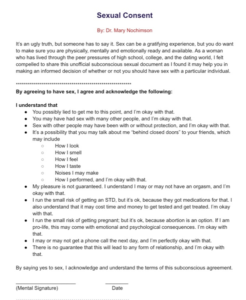
Hormones such as oxytocin, dopamine, and vasopressin increase bonding, emotional encoding, “SUBCONSCOUS Sexual Consent” by Dr. Mary Nochimson that reads like a brutally honest mental contract for sex. It lists real-world risks people often ignore — emotional fallout, being talked about afterward, no guaranteed pleasure, possible STDs, pregnancy, no relationship, and possible ghosting. The document ends with a signature line, framing sex as a conscious decision with physical, emotional, and psychological consequences.and memory consolidation. This is not accidental — the human body is biologically designed to form connection through intimacy.
Even if your logical mind says:
“This is casual.”
“This doesn’t mean anything.”
“I’m fine.”

Your nervous system may still register:
Attachment
Vulnerability
Safety or unsafety
Acceptance or rejection

This is why people sometimes feel lingering emotional responses that seem confusing or disproportionate. The body is not confused — it is recording.

From a craniosacral perspective, moments of heightened emotional or physical intensity can create subtle tension patterns in the fascia, fluid rhythm, and nervous system regulation. These patterns can remain stored until the body feels safe enough to release them.

Your body is not “being dramatic.” It is integrating experience.


Craniosacral Therapy and Somatic Imprints of Intimacy

Craniosacral therapy teaches us that the body holds experience in layered ways — not just through conscious memory, but through tissue memory, fluid motion, and nervous system tone.

Intimate experiences — especially those involving vulnerability, anticipation, emotional hope, or disappointment — can create subtle protective responses such as:

• holding tension patterns in the pelvis or diaphragm
• shifts in breath rhythm
• guarded in her heart or verbal expression
• nervous system hyper-alertness or withdrawal

Even when the experience is positive, the body still integrates the emotional meaning attached to it.

Some individuals notice after relationships or sexual experiences:

• difficulty relaxing in future intimacy
• emotional numbness or over-attachment
• repetitive dating patterns
• subconscious guarding or hyper-vigilance
• feeling “closed off” or “over-open”

These are not personality flaws.
They are adaptive responses stored in the subconscious software and the nervous system hardware.

Craniosacral work helps the body safely release held tension, reorganize fluid rhythm, and restore a sense of internal safety — allowing past experiences to settle rather than silently shaping future ones.


The Subconscious Mind: Hypnotherapy and Emotional Encoding

Your subconscious mind does not evaluate intimacy the way your conscious mind does.

It encodes:
How you felt
What you expected
What happened afterward
What meaning you assigned

If intimacy is followed by rejection, confusion, or emotional disconnection, the subconscious may form protective beliefs such as:

“I shouldn’t trust easily.”
“I have to perform to be valued.”
“Connection doesn’t last.”
“I must give more to receive love.”

These beliefs don’t announce themselves.
They quietly shape attraction, choice of partners, boundaries, and relationship expectations.

Hypnotherapy helps identify and reframe these subconscious associations. It allows the mind to release outdated emotional programming and restore alignment between what you consciously want and what you subconsciously expect.

Without that alignment, people often repeat relational patterns — not because they choose them, but because their nervous system recognizes them.

Familiarity can feel like chemistry.


The Energetic Dimension: Chakras and Intimate Exchange

Across many healing traditions, intimacy is understood as an energetic exchange — not just a physical interaction.

Whether you view chakras symbolically, psychologically, or energetically, they offer a meaningful framework for understanding how intimacy affects different layers of self.

Sacral Chakra — Connection and Emotional Flow

Intimacy activates the center associated with bonding, pleasure, and relational exchange. Repeated emotional merging without clarity can lead to emotional overwhelm, dependency, or disconnection from personal needs.

Heart Chakra — Attachment and Vulnerability

Opening physically often opens emotionally. If the heart repeatedly opens without safety or reciprocity, people may begin to guard, numb, or over-attach in future relationships.

Solar Plexus — Self-Worth and Boundaries

When intimacy happens without full inner alignment, individuals may override personal intuition or values. Over time, this can weaken self-trust or create confusion about personal desires.

Root Chakra — Safety and Security

The body’s foundation of safety is deeply involved in physical closeness. Experiences that feel uncertain, pressured, or emotionally unstable can subtly shift the nervous system’s sense of grounding.

Even when an experience is mutual, kind, and respectful — energy still moves. Openness still occurs. Connection still imprints.

That is simply how humans are designed.


How This Shapes the Cycle of Dating

Every intimate experience becomes part of your internal relational blueprint.

This influences:

• what feels attractive
• what feels familiar
• what feels safe
• what feels uncomfortable
• what you tolerate
• what you believe you deserve

If previous intimacy involved emotional unpredictability, your nervous system may unconsciously expect unpredictability again.

If previous intimacy involved deep connection followed by distance, your subconscious may prepare for loss before closeness even forms.

People often think they are choosing partners based on preference.

But frequently, they are choosing based on nervous system recognition.

Healing and awareness allow you to choose from clarity instead of pattern.


Protecting Your Whole Self Moving Forward

Protecting your heart, mind, body, and soul does not mean avoiding intimacy.

It means approaching intimacy with integration.

Before physical closeness, ask:

Am I calm or seeking validation?
Am I aligned with my deeper values?
Is my heart open from safety or longing?
Is my body relaxed or overriding hesitation?
Am I choosing connection — or relief from loneliness?

After intimacy, notice:

Do I feel grounded or unsettled?
Do I feel nourished or depleted?
Do I feel more like myself — or less?

Your body always communicates truth before the mind explains it.


Healing and Realignment Are Always Possible

If past experiences feel heavy, confusing, or unfinished — that does not mean something is wrong with you.

It means your system is asking for integration.

Gentle, supportive approaches that help restore internal balance include:

• Craniosacral therapy to release somatic holding patterns
• Hypnotherapy to reframe subconscious relational beliefs
• Emotional awareness practices to restore self-trust
• Energy or chakra balancing to re-center personal boundaries
• Mind-body work that reconnects you to internal safety

Healing does not erase experience.
It reorganizes it so you can move forward freely.


A Compassionate Truth

Intimacy is powerful because humans are designed for connection.

Your body bonds.
Your mind encodes.
Your energy responds.

Nothing about that is weakness.

It is biology, psychology, and human design working exactly as intended.

Protecting yourself does not mean closing your heart.
It means honoring the depth of what opens when you share yourself.

And when you honor that depth, your future relationships are no longer driven by unconscious pattern — but by conscious choice.


Dr. Mary’s Gentle Reflection

Before giving your body, listen to your nervous system.
Before opening your heart, honor your intuition.
Before merging energy, know your own center.

The most meaningful relationships begin when you bring your whole, regulated, aligned self into connection — not when you hope intimacy will create that alignment for you.

Your heart, mind, body, and soul deserve to move together.

Warmth & Light, 

Dr. Mary
logo - Dr. Mary Nochimson

The Science of Generational Healing: What Epigenetics Actually Shows

By: Dr. Mary Nochimson

For many years, people assumed inheritance was simple: genes are passed down, and that’s the end of the story.

Modern biology tells a more nuanced — and hopeful — truth.

Your DNA sequence may be inherited, but how genes are expressed can change based on life experience.

This field of study is called epigenetics.

“Epi” means above or on top of genes. Epigenetic mechanisms act like biological switches that turn genes up, down, on, or off depending on environmental input — including stress, safety, nutrition, and emotional experience.

In other words:

Life experiences can leave measurable biological signatures
that influence how the body functions — sometimes across generations.


How experience becomes biology

The most studied epigenetic mechanisms include:

  • DNA methylation — chemical tags that reduce gene activity

  • Histone modification — structural changes that affect gene accessibility

  • Stress hormone regulation pathways — especially involving cortisol and the HPA axis

These systems are highly responsive to environmental conditions, particularly during sensitive developmental periods — pregnancy, infancy, and early childhood.

When stress is chronic or overwhelming, the body adapts biologically.
When safety and regulation are present, the body adapts biologically.

Both directions matter.


Landmark research on stress and inherited biological patterns

1. Early caregiving shapes lifelong stress regulation

One of the most influential research programs in epigenetics comes from neuroscientists Michael Meaney and Moshe Szyf.

They found that rat pups receiving high levels of nurturing maternal care developed healthier stress responses, while those receiving low nurturing showed heightened stress reactivity throughout life.

The difference was not genetic — it was epigenetic.
Maternal behavior altered gene expression in brain regions that regulate stress.

Even more striking:
When nurturing patterns changed, epigenetic patterns changed too.

This demonstrated that environment can biologically “program” stress regulation — and that programming is modifiable.

Key research:
Meaney, M. J., & Szyf, M. (2005). Environmental programming of stress responses through DNA methylation. Dialogues in Clinical Neuroscience.


2. Trauma exposure can affect the next generation’s stress biology

Studies of human populations exposed to extreme trauma provide additional insight.

Research on children of Holocaust survivors found measurable differences in cortisol regulation compared to controls, suggesting altered stress-response systems associated with parental trauma exposure.

Importantly, these findings indicate that severe stress experiences may influence biological regulation patterns in offspring — not through genetics alone, but through epigenetic pathways.

Key research:
Yehuda, R., et al. (2016). Holocaust exposure induced intergenerational effects on FKBP5 methylation. Biological Psychiatry.


3. Prenatal environment shapes long-term health outcomes

The Dutch Hunger Winter of 1944–1945 created a natural experiment in prenatal stress exposure.

Individuals exposed to famine in utero showed persistent epigenetic changes decades later — particularly in genes involved in growth and metabolism. They also displayed higher rates of metabolic and cardiovascular conditions in adulthood.

This demonstrated that early environmental conditions can produce long-lasting biological effects measurable across the lifespan.

Key research:
Heijmans, B. T., et al. (2008). Persistent epigenetic differences associated with prenatal exposure to famine. Proceedings of the National Academy of Sciences.


4. Learned fear responses can influence offspring biology (animal research)

In a widely discussed study, mice conditioned to fear a specific odor produced offspring who showed heightened sensitivity to that same odor — despite never being exposed to the original conditioning experience.

Researchers observed epigenetic changes in sperm associated with sensory processing pathways.

While animal findings cannot be directly generalized to humans, they provide powerful models for understanding biological transmission of environmental learning.

Key research:
Dias, B. G., & Ressler, K. J. (2014). Parental olfactory experience influences behavior and neural structure in offspring. Nature Neuroscience.


The most important takeaway: epigenetic patterns are dynamic

Perhaps the most hopeful finding across epigenetics research is this:

Epigenetic changes are not fixed. They are responsive.

Supportive environments, stress reduction, social connection, nurturing caregiving, and nervous system regulation all influence biological functioning.

Protective factors can buffer risk.
Safety can reshape stress response.
Healing environments can influence gene expression.

This means biology is not destiny.


Why this matters for generational healing

If stress can shape biological patterns…

Then safety can shape them too.

If trauma can influence future regulation…

Then healing can influence future regulation.

When a person learns to regulate their nervous system, process emotion, and experience sustained safety, they are not only improving their own well-being — they may also be altering the biological environment that shapes the next generation’s development.

From a scientific perspective, generational healing is not mystical language.

It is consistent with what we know about:

  • developmental neurobiology

  • stress physiology

  • epigenetic responsiveness

  • intergenerational caregiving patterns


What science and wisdom traditions both recognize

Passover remembers liberation across generations.
Easter remembers restoration across generations.
Epigenetics studies how lived experience shapes biological inheritance across generations.

Different languages.
Same direction.

Human beings are not biologically isolated individuals.
We are living continuations of environments, relationships, and experiences.

And that means something profoundly hopeful:

Every moment of regulation, safety, repair, and compassion
is not only personal healing —
it is biological contribution to the future of humanity.


References (peer-reviewed research)

  • Meaney, M. J., & Szyf, M. (2005). Environmental programming of stress responses through DNA methylation. Dialogues in Clinical Neuroscience.

  • Yehuda, R., et al. (2016). Holocaust exposure induced intergenerational effects on FKBP5 methylation. Biological Psychiatry.

  • Heijmans, B. T., et al. (2008). Persistent epigenetic differences associated with prenatal exposure to famine. PNAS.

  • Dias, B. G., & Ressler, K. J. (2014). Parental olfactory experience influences behavior and neural structure in offspring. Nature Neuroscience.

Passover, Easter & Humanity’s Invitation to Heal

By: Dr. Mary Nochimson

March has a particular kind of “charge” to it.

It’s spring (new life), but the world still feels tender. People are carrying a lot—personally, politically, financially, emotionally. And right as we reach the end of March, two of the most powerful healing stories in human history come into view:

  • Passover begins at sundown on Wednesday, April 1, 2026 and continues through Thursday, April 9, 2026.

  • Easter Sunday is April 5, 2026, with Palm Sunday on March 29, 2026 (meaning this week is the threshold right before Holy Week).

So March Week 4 isn’t just another week. It’s a crossroads week—a doorway.

A week to ask: How do we come out of bondage—together? How do we heal as a humanity?


The shared thread: freedom after pressure

Passover: freedom that begins in the subconscious mind

Passover is the story of liberation—leaving Egypt, leaving oppression, leaving “not-enough-ness.” Not just as a historical moment, but as a recurring human experience: the moment you realize, I can’t live like this anymore.

That’s trauma language, too.

Because trauma isn’t only “what happened.” Trauma is also:

  • the stuckness

  • the shutdown

  • the hypervigilance

  • the feeling of “I can’t get out,” even when the door is open

Passover reminds us: freedom is possible, but it often starts with a choice… and then a practice.

Easter: life that returns after loss

Easter carries the central Christian story of death and resurrection—life returning after devastation.

Whether you hold that as theology, history, metaphor, or mystery, the emotional arc is undeniable:

  • grief

  • surrender

  • love that doesn’t abandon

  • and then… something rises

That’s also nervous-system truth:

Healing rarely looks like “powering through.”
Healing looks like coming back to online, back to reality, back inside our bodies.


A quick (honest) history bridge: how these holidays intertwine

Historically, early Christians connected Jesus’ final days with the Jewish festival cycle, and there’s a long conversation in scholarship and tradition about how exactly those meals and dates align.

  • The Gospels place Jesus’ last week in Passover season, and the Synoptic Gospels describe the final meal in Passover terms—yet many scholars note that the Seder as practiced today developed later, so the “Last Supper = modern Seder” idea is debated.

  • Over time, Christians argued about whether to celebrate Easter in direct alignment with Passover dates or always on a Sunday. This became part of what’s known as the “Easter controversy,” and later church councils helped standardize how Easter’s date is set.

What are your thoughts?


Healing as a humanity

When I zoom out, Passover + Easter together form a healing map:

1. Name what enslaves you (without becoming it)

“Egypt” can be:

  • fear cycles

  • inherited trauma

  • addiction patterns

  • nervous system dysregulation

  • resentment that keeps looping

  • the belief that you’re powerless

This week, try this gentle truth:

“I can honor why this pattern began… and still choose to outgrow it.”

2.  Practice release in the body, not just in the mind

So many people try to “think” their way into peace.

But the body keeps receipts.

If you want to heal at a humanity level, we need more subconsciously aligned humans—not just informed humans.

THIS WEEK,  let your practices be somatic:

  • a 10-minute walk after dinner

  • humming (vagus nerve support)

  • warm bath + slow exhale

  • gentle craniosacral / bodywork / breathwork

  • prayer or meditation that feels like safety, not pressure

3) Choose “unleavened” honesty

In Passover, leaven is removed—symbolically clearing what puffs us up or distorts what’s true.

For modern healing, I read that as:

  • clear out what’s performative

  • come back to what’s real

  • stop pretending you’re fine when you’re burnt out.

This is the week for clean truth:

“Here’s what I actually feel.”
“Here’s what I actually need.”
“Here’s what I’m ready to release.”


A gentle closing thought (and a real invitation)

This season isn’t asking you to be perfect. It’s asking you to be awake.

Passover says: You can leave.
Easter says: You can rise again.

And humanity?
Humanity heals one human being at a time.

If you want support, this is exactly the kind of season where nervous-system care helps everything land more deeply—craniosacral therapy, chiropractic nervous-system work, gentle hypnotherapy, and simple practices you can actually keep.

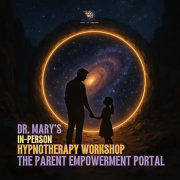
And if you’re a parent: bedtime is a power portal. (That’s why I wrote A Hypnotherapy Bedtime Story—because healing doesn’t have to be hard to be real.)

You don’t have to carry this season alone.

How YOUR Mind Shapes YOUR Child’s Nervous System

By: Dr. Mary Nochimson

There is an ancient philosophical idea that the inner world precedes the outer world.

Modern neuroscience now agrees.

The mind is not simply a generator of thoughts. It is an organizing force. It shapes perception, regulates physiology, and influences development. And nowhere is this more evident than in the relationship between parent and child.

We often believe we are raising our children through instruction.

In reality, we are raising them through transmission.


The Philosophical Foundation: As Within, So Without

Across philosophical traditions, we find the principle that internal reality shapes external experience. This is sometimes referred to as the Law of Correspondence.

In practical terms, it means this: Your internal state—your beliefs, emotional tone, expectations, and sense of safety—creates a corresponding external atmosphere.

Children are exquisitely sensitive to this atmosphere. Before language develops, before logic forms, the nervous system is already interpreting reality. Philosophy long suggested this was true. Neuroscience now explains how.


The Scientific Mechanism: The Nervous System as Messenger

YOUR mind expresses itself through the nervous system. Every thought influences:

  • Breathing patterns

  • Muscle tension

  • Hormonal signaling

  • Attention networks

  • Emotional tone

Research in developmental neuroscience demonstrates that children develop emotional regulation not in isolation, but through co-regulation with caregivers. The adult nervous system acts as a template from which the child’s system organizes itself.

Neural synchrony studies show that during emotionally attuned interactions, caregiver and child brain activity becomes aligned. This alignment supports emotional regulation and learning.

What philosophy called “influence,” neuroscience calls physiological entrainment.


The Subconscious: Where Philosophy Meets Biology

Philosophers have long described the subconscious as the storehouse of beliefs and impressions.

Today we understand this more precisely. Implicit memory, emotional conditioning, and autonomic responses are stored below conscious awareness. These patterns influence behavior without requiring thought. When we carry unresolved stress, anxiety about academics, or fear of failure, those patterns are expressed physiologically.

Children detect this through what neuroscientists describe as neuroception—the nervous system’s automatic scanning for safety or threat. The child is not reacting to words. The child is reacting to state.

This is the biological foundation of what we might call the Law of Transfiguration: internal reorganization alters external experience.


Why Repetition and Imagination Matter

Philosophically, imagination has been called the bridge between inner and outer worlds. Scientifically, imagination activates neural networks in ways similar to lived experience. Repetition strengthens synaptic pathways. This is neuroplasticity.

When a child repeatedly hears calming, confidence-building imagery in a relaxed state—especially before sleep—the subconscious integrates those patterns. This is not suggestion in a mystical sense. It is structured neural reinforcement.

THIS is why hypnotherapy-based storytelling can be so effective. Children naturally enter receptive brainwave states before sleep. In those moments, the mind is especially open to integrating new patterns of safety, confidence, and resilience.

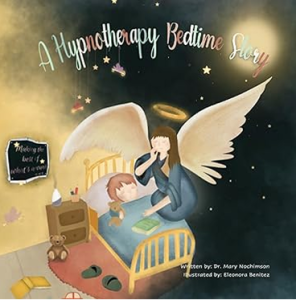
A Hypnotherapy Bedtime Story works because it speaks to the subconscious. It becomes even more powerful when used intentionally.


The Ethical Responsibility of the Adult Mind

If the mind transmits through the nervous system, then awareness becomes an ethical responsibility. We cannot control every outcome in our children’s lives, but we can influence the internal climate from which their outcomes emerge.

When we regulate our own nervous systems:

  • We reduce stress transmission

  • We model cognitive flexibility

  • We provide a template for resilience

Philosophy calls this alignment. Science calls it co-regulation. The outcome is the same.


A Practical Invitation

My hypnotherapy book is designed to work with the subconscious mind—supporting:

  • Developmental milestones

  • Test-taking confidence

  • Emotional regulation

  • Healthy sleep

  • Long-term wellness habits

It is effective on its own, however, when parents understand timing, tone, pacing, and reinforcement principles rooted in nervous-system science, its benefits deepen significantly.

I have seen parents use my book for 

  • Milestone acceleration

  • Improve academic focus and relieve test taking anxiety.

  • Building lasting health and wellness habits

  • Enhance bonding and improve familial relationships.  

Because when the mind is shaped intentionally, the nervous system reorganizes. and when the nervous system reorganizes development follows.

The Invitation:

First, GET YOUR COPY of A Hypnotherapy Bedtime Story

Next, Email Me to schedule a FREE 20 minute tutorial on how to MAXIMIZE health benefits from this book! Email me (NochimsonDC@gmail.com):

📚 Read Across America Day

How Children’s Books Can Inspire Curiosity About Health & Holistic Care

By: Dr. Mary Nochimson

Each year on March 2, libraries, schools, and communities across the country celebrate Read Across America Day, honoring literacy, imagination, and the lifelong impact of reading. While reading is often discussed in terms of academic achievement, its influence reaches far beyond vocabulary and comprehension.

Reading shapes how children understand themselves, their bodies, their emotions, and the world around them.

As a holistic chiropractor and children’s author, Dr. Mary Nochimson creates books that align literacy with health education, emotional intelligence, and body awareness—using storytelling as a bridge between curiosity and empowerment.


📖 Why Health-Focused Storytelling Belongs in Libraries

Libraries play a vital role in:

  • Early health literacy

  • Emotional development

  • Reducing fear around new experiences

  • Supporting diverse learning styles

When children encounter health and wellness topics through stories, they are able to:

  • Ask questions safely

  • Normalize care and self-awareness

  • Develop trust in their bodies

  • Replace fear with understanding

Storytelling allows complex concepts—such as relaxation, nervous system regulation, energy, and mind-body connection—to be introduced age-appropriately and without overwhelm.


🌱 Dr. Mary Nochimson’s Children’s Books: A Gentle Introduction to Holistic Health

Each book in this collection is designed to support libraries seeking educational, calming, and empowering content for children and families.

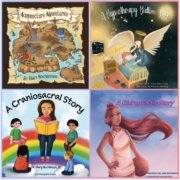
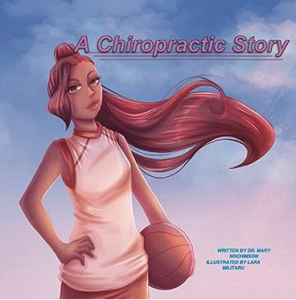
🦴 A Chiropractic Story

This children’s book portrays what may happen during a chiropractic visit along with some of the techniques my fellow chiropractors use.

Introduces children to chiropractic care in a reassuring and accessible way, helping them understand how the spine and nervous system support communication and growth.

Enjoy learning about:

  • Chiropractic techniques for children

  • Chiropractic is NOT JUST about alignment & movement, but also benefits childhood conditions such as plagiocephaly, torticollis, IBS and food allergies.

  • Chiropractic and sports performance 

  • How your body has the ability to heal itself naturally.

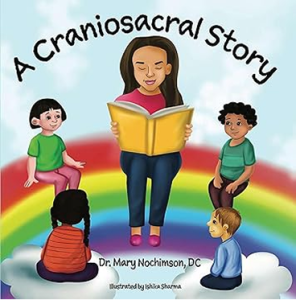
🌊 A Craniosacral Story

A soothing story that explains how the body can hold tension and how calm, stillness, and gentle support help restore balance.

Supports learning about:

  • Craniosacral therapy techniques

  • Sensory Awareness & Emotional regulation

  • Tissue memory & the mind-body connection

  • Especially beneficial for sensitive children.

This book will guide you and your little one through a typical Craniosacral session & put your child’s mind at ease.


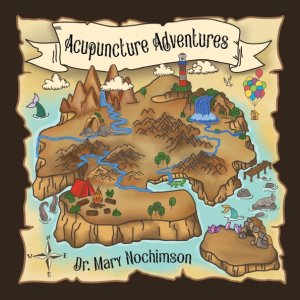
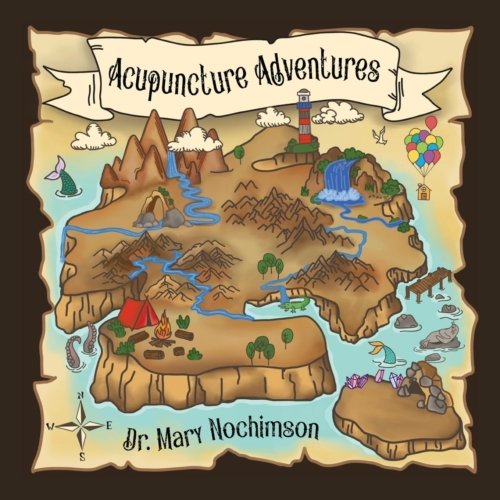
📍 Acupuncture Adventures

A playful exploration of the body’s energy pathways that reframes acupuncture with curiosity and empowerment.

This story helps demystify acupuncture and introduces children to a holistic way of thinking about wellnes

Supports learning about:

  • The Traditional Chinese Medicine chart and how the different elements work with our bodies & our emotions. 

  • The Energy meridians and how balancing them leads to health & wellness.

  • Curiosity-based learning in a mystical and magical environment of our own imagination.

This story helps demystify acupuncture and introduces children to a holistic way of thinking about wellness.


🌙 A Hypnotherapy Bedtime Story

Written specifically for bedtime, this book introduces children to the power of imagination, relaxation, and calming the mind before sleep.

Supports learning about:

      • How to calm your children’s mind and body as part of their bedtime routine.

      • How to use guided meditation to stimulate a healthy imagination. 

      • How to use affirmations to boost confidence & self esteem. 

Perfect addition to any bedtime routine, this book’s purpose is to inspire imagination as your child dozes off to sleep and to empower them in their convictions of who they TRULY are!


🎶 Dr. Knock’s Holisticky Twisty Nursery Rhymes

Playful, rhythmic nursery rhymes that introduce holistic concepts through repetition, music, and fun.

Supports learning about:

  • Health & Wellness Language development

  • Emotional literacy

  • Learning through rhythm and play

Your classic childhood stories are rewritten with a holistic twist in this children’s book. Learn a little bit about Chiropractic, Anatomy and Physiology and nutrition while reading rhymes and tales we grew up with and love.


📚 Alignment With Library & Literacy Goals

These books support:

  • Read Across America initiatives

  • Social-Emotional Learning (SEL) frameworks

  • Health and wellness literacy

  • Inclusive, non-fear-based education

  • Parent-child shared reading experiences

They complement traditional literacy collections while expanding children’s understanding of health as something approachable, empowering, and curiosity-driven.


✨ Why Read Across America Day Is the Perfect Fit

Read Across America Day reminds us that reading:

  • Builds confidence

  • Encourages imagination

  • Shapes how children approach new ideas

Introducing holistic health concepts through storytelling allows libraries to meet children where they are developmentally, while offering families tools for deeper understanding and connection.

When children learn about their bodies through stories, they don’t just gain information—they gain trust in themselves.


📖 A Note to Librarians & Educators

📚 Local Author Highlight:
A Hypnotherapy Bedtime Story has been proudly accepted into the Local Author collection at the Broward County Libraries.

This recognition reflects the growing interest in children’s books that support health of growing bodies, emotional wellness, imagination, and nervous-system regulation.

Families, educators, and librarians are invited to visit their local Broward County Library branch to find and read A Hypnotherapy Bedtime Story as part of Read Across America and beyond.

Thank you for creating spaces where curiosity is welcomed and learning feels safe. Libraries are often a child’s first doorway into understanding the world—and these stories are written with that responsibility in mind.

If you are celebrating Read Across America Day, supporting local authors, or expanding your health and wellness-focused children’s collection, I invite you to explore these books—now including A Hypnotherapy Bedtime Story in the Broward County Libraries AND available on Amazon!

Healthy empowered readers grow into empowered humans.

Dr. Mary

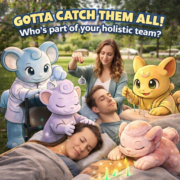
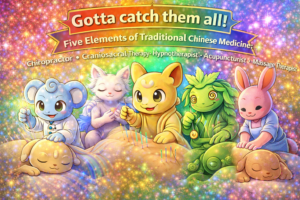
🌟 Gotta Catch Them All… Your Holistic Health Team

By: Dr. Mary Nochimson

If you grew up with Pokémon, you already understand something most people miss about healing…

No single Pokémon wins every battle.
You build a team.

Each one has unique strengths.
Each one supports the others.
Together… they create balance, resilience, and adaptability.

Your health works the same way.

True healing rarely comes from just one provider, one therapy, or one perspective. The body is layered — structural, neurological, emotional, energetic, and behavioral.

That’s why the most powerful approach to wellness is collaborative care.

If you want optimal healing…
You don’t pick one.

You catch them all.


🧠 Why One Modality Isn’t Enough

The human body is not a single system — it’s an integrated network.

Structure influences nerves.
Nerves influence organs.
Emotions influence physiology.
Energy influences regulation.
Touch influences healing chemistry.

Research across integrative medicine consistently shows that multimodal care produces better outcomes for chronic pain, stress disorders, injury recovery, and nervous system dysregulation.

In other words…Different therapies affect different layers of healing.

Let’s meet your dream team.


🦴 The Chiropractor — Structural Alignment Specialist

Your chiropractor focuses on the mechanical and neurological relationship of the spine and joints.

Why that matters:

  • The spine protects the nervous system

  • Joint motion affects brain signaling

  • Mechanical stress alters muscle tone and pain perception

Adjustments help restore:
✔ Joint mobility
✔ Nervous system communication
✔ Movement efficiency
✔ Postural balance

Think of chiropractic care as resetting your body’s hardware.


🌊 The Craniosacral Therapist — SomatoEmotional System Regulator

Craniosacral therapy works with the subtle rhythms of the brain, spinal cord, and connective tissue system.

This gentle approach helps:
✔ Release deep tension patterns
✔ Improve fluid dynamics in the central nervous system
✔ Reduce sensory overload
✔ Shift the body from survival mode into healing mode

This is especially powerful for:

  • Concussion recovery

  • Chronic stress

  • Trauma patterns

  • Sensory regulation challenges

Craniosacral therapy helps your body feel safe enough to heal.


🌙 The Integral Hypnotherapist — Mind-Body Reprogramming Expert

The brain predicts health outcomes based on stored patterns.

Hypnotherapy helps access the subconscious programming that drives:

  • Stress responses

  • Habits

  • Pain perception

  • Emotional triggers

  • Behavioral patterns

Through guided therapeutic trance, the nervous system can:
✔ Release outdated survival patterns
✔ Install healthier responses
✔ Improve focus and resilience
✔ Enhance healing behaviors

If chiropractic resets the hardware… Hypnotherapy updates the software.


🌿 The Acupuncturist — Energy Flow Balancer

Acupuncture works through neurochemical signaling, connective tissue stimulation, and energetic pathways traditionally known as meridians.

Modern research shows acupuncture can influence:
✔ Pain modulation pathways
✔ Inflammation markers
✔ Blood flow regulation
✔ Autonomic nervous system balance

It helps restore functional communication across systems.

Think of acupuncture as improving your body’s internal communication network.


🤲 The Massage Therapist — Tissue Recovery Specialist

Muscles store stress — physically and neurologically.

Therapeutic massage helps:
✔ Improve circulation
✔ Reduce muscle guarding
✔ Enhance lymphatic flow
✔ Release stored tension patterns
✔ Activate parasympathetic relaxation

Massage creates the physiological environment needed for healing to occur.

It’s not just relaxation — it’s recovery.


⚡ When the Whole Team Works Together

Here’s where the magic happens.

Each modality supports the others:

Chiropractic improves structural alignment →
Craniosacral enhances nervous system regulation →
Hypnotherapy shifts behavioral patterns →
Acupuncture balances systemic communication →
Massage restores tissue health

Together they create:

✔ Faster healing
✔ Longer-lasting results
✔ Reduced relapse
✔ Whole-person wellness

This is integrative medicine in action.


🌱 Healing Is Not One Thing — It’s a System

Your body is designed to heal.

But healing requires:

  • Safety
  • Alignment
  • Regulation
  • Adaptation
  • Support

No single therapy does all of that alone….But a TEAM can.


💛 Your Holistic Dream Team

So if health is the goal…

Gotta catch them all:

🦴 Chiropractor
🌊 Craniosacral Therapist
🌙 Integral Hypnotherapist
🌿 Acupuncturist
🤲 Massage Therapist

Not because more is better…

But because complete support creates complete healing.


✨ Final Thought

In Pokémon, evolution happens through growth, experience, and the right environment.

Your body evolves the same way.

When you build the right healing team… TRANSFORMATION becomes possible.


💬 Ready to build your holistic dream team?

Start with one step… Schedule a nervous system reset, alignment session, or guided mind-body consultation. Your healing journey deserves full support! Email me (NochimsonDC@gmail.com):

   And remember… Your Health & Wellness is worth catching them all!

Happy Gal & Palentine’s Day

💕How to connect with your heart 💕

By: Dr, Mary Nochimson


Did you know that your heart started working when you were just 3 weeks old in-utero and it continues to work today????

Listen to your heart takes on new meaning in Craniosacral. A huge component of Craniosacral
involves communicating to your cells, tissues, organs and glands in your body. Due to third party
perspective, having a conversation with yourself is not viewed as a “cool” thing to do, but it is
very therapeutic and often results in a beautiful moment.

Did you know that your body is made up of a community of millions of tiny organisms known as
cells. Each cell has a job, an energy and a personality! That’s right! Even a bacterium, a
one-celled organism, has a purpose, has an energy and has a personality. 24 hours of every
day, cells of the lung community work together to form breathing. Sixty minutes of every hour of
every day, cells of the gastrointestinal community work together to process the food we eat. 60
seconds of every minute of every hour of every day, the cells of the heart community work
together to beat and pump fresh oxygenated blood throughout your body. All out of site and out
of mind, but even cells, just like people, like to be acknowledged, loved and appreciated.
So the next questions are how do you talk to your body? How do you listen to your body and
what does your body say? Do you acknowledge the work your body does on a daily basis?
There is no better Galentine’s present than speaking to your heart and doing what makes your
heart happy!!!

How do we begin the process?
First, let’s set the mood. I suggest sitting or laying down in a comfortable spot, dimming the
lights or having the lights off with a scentless candle. The beach or a park are also great
locations. Soundwise, I recommend quietness or light soothing wordless music. We don’t want
to persuade our body or appease our body, we want to have a real conversation.
Wherever you are, this is the next step. Lightly place one or two hands over your heart and just
envision your heart. Keep meditating on your heart. With the palm of your hand, feel the beating
of your heart. Is it beating fast? Is it beating slow? Is it beating strong? Is it beating soft? Once
you feel your heartbeat, tune into your heart sounds with your ears. Mimic the beats with a
whisper, “lub, dub… lub dub”. Keep tuning into your heart. As you continue to go deeper into
meditation, feel that connection. Note how it feels to be this connected with your heart. And note
any images or memories develop in your mind.

This next part will help guide you for your heart to human conversation.

First let’s talk rules:

  1. After you ask a question, wait for the answer. Be patient. Your heart may answer in
    words or in images. Acknowledge the image of words as they come into your body and
    mind.
  2. Don’t doubt the words and images that come to you. It’s NOT in your head. Your head
    may try to get in the way of the conversation.
  3. Always thank your heart (or any organ you talk to) for taking time to talk to you today.

What are questions to ask your heart?

  1. How are you feeling?
  2. What makes you sad?
  3. What makes you happy?
  4. Is there anything bothering you?
  5.  What do you need?
  6. What can I do differently that will help you function better?
  7. What did you want to do today?

This Valentine’s Day, give yourself 10-20 minutes to practice connecting and talking to your
heart.