Back to School: Taking Care of the One They Depend on Most—You

As the school year gets rolling, we are often hyper-focused on our children’s scholastic needs — the back to school shopping, figuring out transportation strategies and other routine shifts as we transition to the first day of school, kids homework, planning after school activities and play dates… making sure they have everything they need so they can be successful. In all this motion, it’s easy to forget that our well-being matters just as much as our child’s. 

Right!? What about you? Do you have everything you need?

Here’s the truth:

You are the emotional center of your home.

If something happens to you, … just think about that.

You don’t just need to be present—you need to be healthy.

This season, instead of focusing only on structure and success for our child, let’s take a moment to focus on balance and sustainability for ourselves.

Let’s explore four key areas we need to make sure we balance so we can maintain our health, strengthen the connection between us and our children, as we get back  into the back-to-school season:

Work. Play. Love. Pray.

WORK: Align with Purpose

Many parents are silently struggling under the weight of work because of the long hours or the never-ending to-do lists. There is a more important disconnect between what you are doing and our earthly purpose, which is the ultimate life fulfiller.

If you wake up dreading the day or come home feeling defeated, our child notices. They pick up on the tone in our voice, the look in our eyes, and the energy we carry.

When work becomes only survival, we subconsciously teach our kids that adulthood is something to endure, not something to enjoy.

But it doesn’t have to be that way.

You don’t need to make a dramatic career change tomorrow. But you can begin asking important questions:

  • Does this work align with who I am?

  • Am I honoring my talents and purpose?

  • What small steps could move me closer to fulfillment?

Even micro-shifts—boundaries around after-hours emails, time blocked for creativity, or letting go of a side obligation—can start to create breathing room. We were not born to run on autopilot. We are gifts. We were born to bring something meaningful into the world. When you reconnect with that purpose, your child learns that work can be fulfilling, not just necessary.

🎈PLAY: Allow your children to show you the way. 

Play isn’t just for kids—Play is medicine for our souls. Play reconnects us to our inner child. 

As adults, we often forget the importance of play. We are so busy and tired at the end of the day, we view playing with our kids as an added chore instead of seeing ‘playing with our kids’ as an opportunity for ourselves to experience no bills and a fresh perspective. 

Our child doesn’t need elaborate vacations or fancy outings. What they need is US, fully present—even for just 10 minutes:

  • Cloud-Gazing 

  • Revisit a favorite park or arcade

  • Say yes to a dance party in the living room, which I haven’t done in a while.

  • Do a puzzle. 

  • Paint the picture. 

  • Build a Lego tower.

And most importantly—put the phone down. I know you were thinking it 😉. Let them feel our undivided attention on them, and allow these experiences to fill our hearts and minds. Don’t Facebook the moment… actually CREATE the moment, EXPERIENCE the moment. Let’s Go Ahead & fill our minds with these positive memories we’ve created,… so when we turn 70, we can close our eyes and reflect on them. You know… the classic scenario of our parents sharing these stories at the dinner table or at bedtime. That is TRUE joy. It’s not history, it’s Yerstory (“your story”). It’s how we learn, so we can heal and thrive generationally.  

❤️ LOVE: Self-Love is Paramount

We love our children deeply. That’s never in question.

But here’s a harder question: Do we love ourselves enough to take care of ourselves?

Many parents run on empty, believing that sacrificing their needs is part of the job. Do you, fellow parents, remember the book “The Giving Tree”? Back in the day… it was everyone’s favorite… 

Well, Parents, we can’t be the Giving Tree, we have to be “The Giving Tree that Keeps on Giving”, and to do that… we have to nourish ourselves – body, mind, and spirit. 

It means:

  • Treat  yourself to a spa day…solo or with a pal or a gal

  • Get your Hair & Nails done

  • Go to the Chiropractor 

  • Get that Massage

  • Sure, Acupuncture

  • Do mind health therapies – yoga, meditation, hypnotherapy 

  • Do emotional health therapies –  in my professional opinion, Craniosacral is known for its Somatoemotional releases. 

Yes—it means taking care of our health. Because when that quiet voice whispers, “If something happens to me…”—you know it’s a rational fear.

We are their world….And our well-being is of utmost importance. Period!

🙏 PRAY: Create Space to Come Back to your spiritual self

I will tell you now. When I am working on patients in my clinic, FAITH (not science)  is the #1 Healer. I’m not saying “religion”, I’m saying “spiritual” – God, Hashem, Universe, Higher Self, Inner Wisdom, Universal Intelligence… spiritual. It’s not just the absence of external noise, but a conscious quieting of the mind and body to foster a sense of presence and awareness… Stillness when in prayer, meditation, journaling, or quiet reflection… is where healing happens. THIS connection to yourself. 

You don’t need an hour of solitude. You need a few consistent minutes:

  • A deep breath before the day starts

  • A quiet prayer in the car before pickup

  • A gratitude list before bed

  • A moment of stillness between transitions

When we create space to reconnect with our source—however you define it—we show up with more clarity, more anchoredness, more awareness, and more capabilities.

With Love & Light, 

Dr. Mary 

Helping parents raise emotionally strong, spiritually grounded, and healthy children—by giving them the tools they need to be successful.

Navigating Holistic Immunity

Immunity isn’t just about avoiding illness—it’s about cultivating immunity within by strengthening our white blood cells defenses by arming them with nutrients and healthy lifestyle habits. 

The fact is that more individuals have been turning to natural healing to protect and nourish their bodies. The question is:

Which holistic approach is right for me?

From subtle energetic therapies to herbal medicine, each modality contributes uniquely to your body’s ability to support, adapt, heal, and thrive. Let’s explore how these natural disciplines support your immune system.

Q: What’s the difference between Homeopathy and Herbology?

Homeopathy

It’s a natural way of supporting your body through the healing process using “remedies” consisting of a severely diluted form of “a substance”…. Just enough to stimulate the body’s immune system. 

Instead of fighting against symptoms, homeopathy supports your body’s natural defenses. 

Herbology

Herbs. Not dilutions of Herbs. Whole plants support immunity through tonifying, detoxifying, anti-inflammatory, or adaptogenic properties. For almost every Western medicine pill, there is a Mother Nature equivalent. Herbs such as echinacea, astragalus, elderflower, and reishi mushroom, nature has proven to be effective in supporting the immune system at every stage of immunity—prevention, defense, and recovery.

Q: How does Chiropractic care impact immunity?

The nervous system and immune system are deeply interconnected. When the spine is misaligned, it can disrupt this connection, creating interference in how the body organizes defense and healing.

Chiropractic adjustments restore alignment and nervous system clarity, which allows immune responses to flow with more ease and coordination. Regular care supports lymphatic flow, stress reduction, and greater adaptability—key components of immune health.

Q: Can Hypnotherapy boost my immune system?

Absolutely!!! Activating and connecting with your subconscious mind is the key to healing your body. Chronic stress, unresolved fears, and subconscious beliefs can quietly suppress immunity. Hypnotherapy helps you release the tension held in the mind and body, inviting a deep parasympathetic state, which is when healing begins.

It also strengthens mental imagery, where clients visualize their immune system glowing, protecting, and rebuilding—planting seeds that bloom in real, physiological ways.

Q: Where does Massage Therapy fit in?

Massage therapy does more than relax the muscles—it activates the flow of blood and lymph throughout your system. It stimulates lymphatic drainage, moves stagnant energy, encourages detoxification, and reduces the amount of stress hormones.

As tension releases and circulation improves, immune cells move freely, waste is cleared, and the body feels safe enough to restore. Getting massages regularly provides emotional relief as well, which is deeply entwined with our physical defense mechanisms.

Q: How does Acupuncture influence the immune system?

In Traditional Chinese Medicine, immunity is governed by the flow of Qi (life force) through meridians. When Qi is blocked or deficient—especially in the lung, spleen, or kidney channels—the body becomes more vulnerable to imbalance.

Acupuncture activates precise energetic pathways, encouraging smooth circulation, enhanced energy, and organ balance. It harmonizes the internal environment, helping your system respond with clarity and calm when challenged.

Q: What’s the role of Naturopathy in immune support?

Naturopathy is a whole-person approach to healing, rooted in the belief that the body knows how to heal itself when given the proper support. Naturopathic guidance often includes food as medicine, mineral and plant-based supplementation, detox practices, circadian alignment, and emotional nourishment.

The immune system isn’t just a defense mechanism—it’s an expression of how well you’re living in tune with your body, your rhythms, and your environment. Naturopathy helps restore that harmony.

Q: Can Aromatherapy really influence immunity?

Yes—and beautifully so. Essential oils work on a sensory and cellular level, offering antiviral, antibacterial, and calming properties. Oils like frankincense, tea tree, and eucalyptus are immune boosters, while others like lavender are stress relieving.

Inhaling these plant essences in the form of diffusing influences the limbic brain, helping shift patterns of fear or tension while gently supporting respiratory and immune function.

💫 Ready to begin your journey? Grab yourself a copy of my manual

There is no wrong path when it’s paved with intention. Begin where you feel called. Listen to your immune system 🫶🏻

With love and alignment,

Dr. Mary

Setting SMARTER Goals: How to Integrate Holistic Modalities for Sustainable Success!

Setting goals is an essential part of personal and professional development. But for goals to be sustainable and effective—especially in the context of health and wellness—they must be realistic, adaptable, and aligned with a your overall well-being.

In this article, I explore the SMARTER goal-setting model and provide examples of how to integrate holistic health practices into each phase of the process.

🧭 What Are SMARTER Goals?

The SMARTER framework builds upon the traditional SMART goal method by adding two critical components: Emotionally Charged and Rewarding. This makes the model more dynamic and suitable for long-term behavior change and personal growth.

Here’s what SMARTER stands for:

S – Specific.

M – Measurable.

A – Achievable.

R – Relevant.

T – Time-bound.

E – Emotional Charge.

R – Reward(ing).

📝Step-by-Step: Applying SMARTER Goals with Holistic Integration

S – Specific. The goal is clearly defined and unambiguous. Make it literal. Write it out. Vague goals like “be healthier” don’t provide direction.

✅ Example: “Walk 30 minutes every morning before work.”

Holistic Tip: Start your day with a mindful breathing ritual to center your intention. Let your morning walk become a moving meditation.

M – Measurable. Progress and outcome can be quantified or tracked. Track your progress. Knowing how far you’ve come keeps you motivated.

✅ Example: “Drink at least 1 glass of water daily for 30 days.”

Holistic Tip: Add slices of cucumber, lemon, or mint to your water for added hydration and digestive support. Track your intake in a wellness journal.

A – Achievable. The goal is realistic and attainable based on current resources. Stretch yourself, but be realistic. Goals that are doable build momentum.

✅ Example: “Attend one yoga class per week instead of seven when you’re just starting.”

Holistic Tip: Support your body’s physical and mental health with chiropractic care or massage therapy. Gentle alignment promotes endurance and prevents burnout.

R – Relevant.The goal aligns with personal values, priorities, or needs. Goals should align with your deeper priorities, values, or needs—not external pressures.

✅Example Goal: “Establish a calming evening routine to support deeper sleep.”

Holistic Tip: Use aromatherapy (lavender, vetiver) and journaling to unwind. When goals align with emotional wellness, they become more meaningful.

T – Time-bound. The goal includes a clear timeframe. Set a realistic timeline. Dates create urgency—but don’t forget to build in flexibility.

✅ Example: “Complete a 21-day gratitude journaling challenge by the end of the month.” 

Holistic Integration: Replace screen time with restorative practices such as journaling, breath work, or outdoor walks. These alternatives also support parasympathetic (rest-and-digest) activation.

E – Emotionally Charged. The goal should tap into your emotions. Motivation increases when you feel connected to the outcome—especially when it’s rooted in something personal.

✅Example: “I want to improve my energy so I can be more present and patient with my children.”

Holistic Integration: Self care. Massage, craniosacral and hypnotherapy monthly… this is how parents do it!  

R – Reward (and rewarding 😉). Completion or milestones are acknowledged and celebrated.

Celebrate milestones—big and small! Rewards activate joy and fuel forward momentum.

✅ Example: “After two weeks of consistent stretching, book a reflexology session or enjoy a nature walk.”

Holistic Tip: Let the reward support your wellness. Choose experiences over things—your nervous system will thank you.

Integrating Holistic Modalities to Achieve Your Goals

Once your goals are set, it’s time to support your journey from the inside out. Holistic modalities help you regulate your nervous system, enhance focus, and stay connected to your purpose. Here’s how to integrate them:

🧘‍♀️ 1. Mindfulness and Meditation

A clear mind creates a focused path. Daily mindfulness—whether through meditation, breath work, or quiet reflection—reduces stress and keeps you aligned with your intentions.

Try this: Start your morning with a 5-minute intention-setting meditation using HypnoNapp💤. Visualize your goal and imagine it already complete.

✍️ 2. Journaling & Visualization

Journaling is a powerful self-awareness tool especially when combined with hypnotherapy. Write about your “why,” track your emotions, or reflect on progress. Create a vision board or write a daily affirmation that embodies your goal. Your subconscious mind will help guide your actions.

🌱 3. Nutrition & Hydration

Your body is your vessel. Nourishing foods and proper hydration impact clarity, energy, and emotional regulation—all critical to staying motivated. Incorporate grounding herbal teas (like tulsi or chamomile) to support calm and clarity.

💆‍♂️ 4. Bodywork and Energy Healing

Practices like chiropractic care, craniosacral therapy, acupuncture, or massage can release stored tension, enhance vitality, and bring your body back into alignment. When your body feels safe and supported, your mind follows.

💫 5. Affirmations and Hypnotherapy

Your internal dialogue shapes your reality. Replace self-doubt with empowering affirmations or explore hypnotherapy to reprogram limiting beliefs.

“I am aligned. I am supported. I am achieving my goals with ease and grace.”

✨ Final Thoughts: Let It Be a Journey, Not a Sprint

Goals aren’t just destinations—they’re invitations to become more of who you truly are. By integrating holistic tools, you’re not just accomplishing tasks—you’re transforming from the inside out.

Honor the process. Nourish your body. Trust your timing, because the best version of yourself doesn’t come through force—it unfolds through alignment.

Peace and Light,

Dr. Mary 

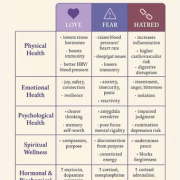
Love Saves, Fear Enslaves

💪 1. Physical Health: How Fear Affects the Body

Fear triggers the stress response, also known as the fight-or-flight response, which is controlled by the sympathetic nervous system and the HPA axis (hypothalamic-pituitary-adrenal axis). When activated: 

● Cortisol and adrenaline are released → increasing heart rate, blood pressure, and blood sugar. 

● Immune function is suppressed → chronic fear and stress weaken immune defenses, increasing vulnerability to infections and slowing healing (Cohen et al., 2012, PNAS). 

● Digestive problems emerge → chronic fear can contribute to ulcers, IBS, and poor nutrient absorption due to reduced parasympathetic activity. 

● Cardiovascular strain → long-term fear increases the risk of hypertension, heart attacks, and stroke (Yusuf et al., 2004, The Lancet). 

🧬 “Chronic fear reprograms genetic expression in immune cells, suppressing their ability to mount effective responses.” — Harvard Medical School, 2021  

😔 2. Emotional and Mental Health: Fear’s Toll on the Mind 

● Amygdala overactivation → fear increases activity in the brain’s threat detection center, leading to anxiety, hypervigilance, and emotional dysregulation. 

● Impaired memory and learning → high cortisol affects the hippocampus, leading to memory lapses, brain fog, and difficulty concentrating. 

● Mood disorders → long-term fear is linked to depression, PTSD, generalized anxiety disorder, and OCD. 

● Addiction and escapism → some people cope with chronic fear through numbing behaviors like substance abuse or compulsions (APA).

📉 Studies show that unresolved childhood fears increase adult risk of anxiety and depressive disorders by over 300%. — National Institute of Mental Health 

🕊️️ 3. Spiritual Health: Disconnection, Isolation, and Suppressed Energy 

From a holistic and energetic health perspective: 

● Fear lowers vibrational frequency, keeping individuals in survival states rather than thriving states (based on David Hawkins’ Map of Consciousness). 

● Fear severs the heart-brain connection, making it harder to experience love, gratitude, or higher spiritual states (HeartMath Institute). 

● Energetic blockages in chakras, especially the root and heart chakras, can arise with persistent fear, leading to feelings of insecurity and disconnection. 

● Suppressed creativity and intuition → fear shuts down the higher brain centers associated with imagination, inner vision, and trust in divine timing. 

✨ “Fear is not just a feeling; it is an energy that limits our light and dims our purpose.” — Dr. Joe Dispenza 

Hatred is a chronic, toxic emotional state that affects every level of human health—physically, emotionally, mentally, and spiritually. Scientific studies have shown that harboring resentment, rage, or deep-seated hatred can profoundly dysregulate your nervous, immune, and cardiovascular systems, while also stunting psychological resilience and spiritual well-being.

🧬 1. Physical Health: Hatred as a Disease Generator 

Hatred activates the sympathetic nervous system, keeping the body in a prolonged fight-or-flight state. This chronic stress response leads to: 

🔥 Inflammation & Immunosuppression:

● Hatred increases inflammatory markers like IL-6 and C-reactive protein (CRP), both linked to heart disease, arthritis, and autoimmune disorders. 

● A study published in Psychological Science found that people who held on to grudges had weaker immune responses and higher inflammation. 

🫀 Heart Disease & Hypertension: 

● Chronic anger and hatred are major risk factors for heart attacks and stroke. According to the American Heart Association, explosive anger increases the risk of a cardiovascular event within hours. 

● Elevated blood pressure, heart rate, and arterial constriction are common during moments of intense hatred or rage. 

😵‍💫 Poor Sleep, Gut, and Hormonal Disruption: 

● The stress hormones triggered by hatred (cortisol, adrenaline) disrupt circadian rhythms, digestion, and hormonal balance. 

● Chronic stress also increases visceral fat, contributing to metabolic issues like diabetes and obesity. 

🧠 2. Mental & Emotional Health: Hatred Hijacks the Brain

🧨 Amygdala Overdrive: 

● Hatred hyperactivates the amygdala, the fear and aggression center of the brain, increasing reactivity and lowering emotional regulation. 

● It reduces activity in the prefrontal cortex, which governs rational thinking, empathy, and decision-making. 

😔 Chronic Anxiety & Depression: 

● Long-term hatred and resentment are associated with rumination, which perpetuates depression and fuels anxiety disorders.

● Holding hatred has been shown to impair memory and cognitive flexibility. 

🕳️️ Isolation & Identity Attachment: 

● Hatred can become a part of identity, causing someone to see the world through a distorted lens of threat and otherness, reducing emotional resilience and increasing social isolation. 

“Unresolved anger and hatred are like slow-drip poison to the soul and the body.” — Dr. Gabor Maté 

🕊️️ ️ 3. Spiritual Consequences: Disconnection from Love & Source 

In holistic and energy medicine frameworks, hatred is understood as a low vibrational state that blocks flow and connection to Source/God/Spirit. 

✝️ Loss of Inner Peace: 

● Hatred is spiritually draining. It disconnects individuals from higher virtues like compassion, forgiveness, unity, and love. 

● It creates mental fragmentation, preventing alignment of the mind-body-spirit system. 

🌌 Energetic Imbalance: 

● Hatred blocks the heart chakra and often the throat and crown chakras as well, leading to disconnection from truth and purpose. 

● It creates stagnant energy, especially in the liver (in TCM, the organ associated with anger). 

💫 “Holding onto hatred is like drinking poison and expecting the other person to die.” — often attributed to the Buddha

💔❤️‍🩹❤️ 1. Physical Health: Love Heals the Body

🔬 Love reduces stress hormones 

When we experience love (especially deep connection, affection, and safety), the brain reduces cortisol production and activates the parasympathetic nervous system, which lowers: 

● Blood pressure 

● Heart rate 

● Muscle tension 

● Inflammation 

📚 Study: The National Institutes of Health found that loving-kindness meditation decreased inflammatory markers (IL-6) and improved heart rate variability. 

💕 Oxytocin: The “Love Hormone” 

Touch, affection, and emotional bonding stimulate the release of oxytocin, which:

● Promotes healing and tissue regeneration 

● Boosts immune system function 

● Enhances pain tolerance 

● Improves digestion and nutrient absorption 

📖 Harvard Medical School found that oxytocin improves cardiovascular health by relaxing blood vessels and reducing blood pressure. 

🧬 Love boosts immunity

● Couples in healthy relationships have higher levels of natural killer (NK) cells, which defend the body against viruses and tumors (Cohen et al., Psychosomatic Medicine). 

● In contrast, loneliness and lack of love were associated with lower antibody production after vaccines. 

🧠 2. Mental & Emotional Health: Love Stabilizes the Mind & Enhances brain function 

● Love increases dopamine and serotonin, neurotransmitters that regulate mood, motivation, and memory. 

● Emotional bonding improves activity in the prefrontal cortex, enhancing decision-making and reducing anxiety. 

University of Chicago research shows that people in secure, loving relationships have lower risks of depression, PTSD, and anxiety disorders. 

🧘‍♀️ Reduces symptoms of trauma 

● Loving relationships and therapeutic environments rooted in love (vs. fear or control) are shown to promote trauma resolution. 

● Love creates emotional safety, which is essential for somatic healing and nervous system regulation (Polyvagal Theory, Dr. Stephen Porges). 

🕊️️ ️ 3. Spiritual & Energetic Health: Love Aligns the Soul

✨ High vibrational state 

In energetic medicine, love is measured as one of the highest vibrational emotions (David Hawkins’ Map of Consciousness). It fosters:

● Connection to purpose and intuition 

● Feelings of peace, unity, and higher meaning 

● Emotional resilience and spiritual attunement 

“Love is the frequency of coherence. It aligns the body’s rhythms with the Earth and Source.” — HeartMath Institute 

🧘‍♀️ Love facilitates mind-body-spirit integration 

● Spiritual traditions, from Christianity to Buddhism, center on unconditional love as a healing force. 

● Love enhances states of gratitude, forgiveness, and compassion—each of which has been scientifically tied to longer life and better health outcomes. 

📚 Study: Researchers from UC Berkeley found that practicing compassion and loving-kindness activates the brain’s default mode network (linked to empathy, meaning, and creativity). 

❤️‍ Bottom Line: Love Heals, Fear & Hatred Enslave

When we live in fear: 

● The body becomes inflamed, dysregulated, and prone to disease. 

● The mind becomes rigid, reactive, and self-limiting. 

● The spirit becomes disconnected from its higher wisdom and inner peace.

But when we shift to love—through safety, connection, trust, and holistic healing—the nervous system relaxes, immunity restores, and healing begins. 💗