
Love Saves, Fear Enslaves
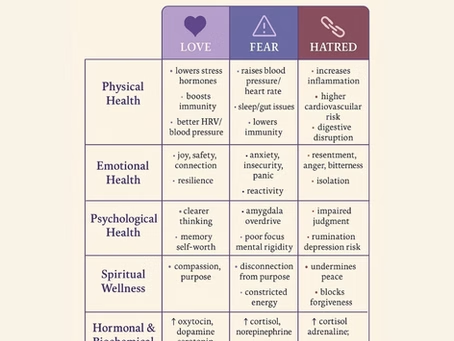
💪 1. Physical Health: How Fear Affects the Body
Fear triggers the stress response, also known as the fight-or-flight response, which is controlled by the sympathetic nervous system and the HPA axis (hypothalamic-pituitary-adrenal axis). When activated:
● Cortisol and adrenaline are released → increasing heart rate, blood pressure, and blood sugar.
● Immune function is suppressed → chronic fear and stress weaken immune defenses, increasing vulnerability to infections and slowing healing (Cohen et al., 2012, PNAS).
● Digestive problems emerge → chronic fear can contribute to ulcers, IBS, and poor nutrient absorption due to reduced parasympathetic activity.
● Cardiovascular strain → long-term fear increases the risk of hypertension, heart attacks, and stroke (Yusuf et al., 2004, The Lancet).
🧬 “Chronic fear reprograms genetic expression in immune cells, suppressing their ability to mount effective responses.” — Harvard Medical School, 2021
😔 2. Emotional and Mental Health: Fear’s Toll on the Mind
● Amygdala overactivation → fear increases activity in the brain’s threat detection center, leading to anxiety, hypervigilance, and emotional dysregulation.
● Impaired memory and learning → high cortisol affects the hippocampus, leading to memory lapses, brain fog, and difficulty concentrating.
● Mood disorders → long-term fear is linked to depression, PTSD, generalized anxiety disorder, and OCD.
● Addiction and escapism → some people cope with chronic fear through numbing behaviors like substance abuse or compulsions (APA).
📉 Studies show that unresolved childhood fears increase adult risk of anxiety and depressive disorders by over 300%. — National Institute of Mental Health
🕊️️ 3. Spiritual Health: Disconnection, Isolation, and Suppressed Energy
From a holistic and energetic health perspective:
● Fear lowers vibrational frequency, keeping individuals in survival states rather than thriving states (based on David Hawkins’ Map of Consciousness).
● Fear severs the heart-brain connection, making it harder to experience love, gratitude, or higher spiritual states (HeartMath Institute).
● Energetic blockages in chakras, especially the root and heart chakras, can arise with persistent fear, leading to feelings of insecurity and disconnection.
● Suppressed creativity and intuition → fear shuts down the higher brain centers associated with imagination, inner vision, and trust in divine timing.
✨ “Fear is not just a feeling; it is an energy that limits our light and dims our purpose.” — Dr. Joe Dispenza
Hatred is a chronic, toxic emotional state that affects every level of human health—physically, emotionally, mentally, and spiritually. Scientific studies have shown that harboring resentment, rage, or deep-seated hatred can profoundly dysregulate your nervous, immune, and cardiovascular systems, while also stunting psychological resilience and spiritual well-being.
🧬 1. Physical Health: Hatred as a Disease Generator
Hatred activates the sympathetic nervous system, keeping the body in a prolonged fight-or-flight state. This chronic stress response leads to:
🔥 Inflammation & Immunosuppression:
● Hatred increases inflammatory markers like IL-6 and C-reactive protein (CRP), both linked to heart disease, arthritis, and autoimmune disorders.
● A study published in Psychological Science found that people who held on to grudges had weaker immune responses and higher inflammation.
🫀 Heart Disease & Hypertension:
● Chronic anger and hatred are major risk factors for heart attacks and stroke. According to the American Heart Association, explosive anger increases the risk of a cardiovascular event within hours.
● Elevated blood pressure, heart rate, and arterial constriction are common during moments of intense hatred or rage.
😵💫 Poor Sleep, Gut, and Hormonal Disruption:
● The stress hormones triggered by hatred (cortisol, adrenaline) disrupt circadian rhythms, digestion, and hormonal balance.
● Chronic stress also increases visceral fat, contributing to metabolic issues like diabetes and obesity.
🧨 Amygdala Overdrive:
● Hatred hyperactivates the amygdala, the fear and aggression center of the brain, increasing reactivity and lowering emotional regulation.
● It reduces activity in the prefrontal cortex, which governs rational thinking, empathy, and decision-making.
😔 Chronic Anxiety & Depression:
● Long-term hatred and resentment are associated with rumination, which perpetuates depression and fuels anxiety disorders.
● Holding hatred has been shown to impair memory and cognitive flexibility.
🕳️️ Isolation & Identity Attachment:
● Hatred can become a part of identity, causing someone to see the world through a distorted lens of threat and otherness, reducing emotional resilience and increasing social isolation.
“Unresolved anger and hatred are like slow-drip poison to the soul and the body.” — Dr. Gabor Maté
🕊️️ ️ 3. Spiritual Consequences: Disconnection from Love & Source
In holistic and energy medicine frameworks, hatred is understood as a low vibrational state that blocks flow and connection to Source/God/Spirit.
✝️ Loss of Inner Peace:
● Hatred is spiritually draining. It disconnects individuals from higher virtues like compassion, forgiveness, unity, and love.
● It creates mental fragmentation, preventing alignment of the mind-body-spirit system.
🌌 Energetic Imbalance:
● Hatred blocks the heart chakra and often the throat and crown chakras as well, leading to disconnection from truth and purpose.
● It creates stagnant energy, especially in the liver (in TCM, the organ associated with anger).
💫 “Holding onto hatred is like drinking poison and expecting the other person to die.” — often attributed to the Buddha
💔❤️🩹❤️ 1. Physical Health: Love Heals the Body
🔬 Love reduces stress hormones
When we experience love (especially deep connection, affection, and safety), the brain reduces cortisol production and activates the parasympathetic nervous system, which lowers:
● Blood pressure
● Heart rate
● Muscle tension
● Inflammation
📚 Study: The National Institutes of Health found that loving-kindness meditation decreased inflammatory markers (IL-6) and improved heart rate variability.
💕 Oxytocin: The “Love Hormone”
Touch, affection, and emotional bonding stimulate the release of oxytocin, which:
● Promotes healing and tissue regeneration
● Boosts immune system function
● Enhances pain tolerance
● Improves digestion and nutrient absorption
📖 Harvard Medical School found that oxytocin improves cardiovascular health by relaxing blood vessels and reducing blood pressure.
🧬 Love boosts immunity
● Couples in healthy relationships have higher levels of natural killer (NK) cells, which defend the body against viruses and tumors (Cohen et al., Psychosomatic Medicine).
● In contrast, loneliness and lack of love were associated with lower antibody production after vaccines.
🧠 2. Mental & Emotional Health: Love Stabilizes the Mind & Enhances brain function
● Love increases dopamine and serotonin, neurotransmitters that regulate mood, motivation, and memory.
● Emotional bonding improves activity in the prefrontal cortex, enhancing decision-making and reducing anxiety.
University of Chicago research shows that people in secure, loving relationships have lower risks of depression, PTSD, and anxiety disorders.
🧘♀️ Reduces symptoms of trauma
● Loving relationships and therapeutic environments rooted in love (vs. fear or control) are shown to promote trauma resolution.
● Love creates emotional safety, which is essential for somatic healing and nervous system regulation (Polyvagal Theory, Dr. Stephen Porges).
🕊️️ ️ 3. Spiritual & Energetic Health: Love Aligns the Soul
✨ High vibrational state
In energetic medicine, love is measured as one of the highest vibrational emotions (David Hawkins’ Map of Consciousness). It fosters:
● Connection to purpose and intuition
● Feelings of peace, unity, and higher meaning
● Emotional resilience and spiritual attunement
“Love is the frequency of coherence. It aligns the body’s rhythms with the Earth and Source.” — HeartMath Institute
🧘♀️ Love facilitates mind-body-spirit integration
● Spiritual traditions, from Christianity to Buddhism, center on unconditional love as a healing force.
● Love enhances states of gratitude, forgiveness, and compassion—each of which has been scientifically tied to longer life and better health outcomes.
📚 Study: Researchers from UC Berkeley found that practicing compassion and loving-kindness activates the brain’s default mode network (linked to empathy, meaning, and creativity).
❤️ Bottom Line: Love Heals, Fear & Hatred Enslave
When we live in fear:
● The body becomes inflamed, dysregulated, and prone to disease.
● The mind becomes rigid, reactive, and self-limiting.
● The spirit becomes disconnected from its higher wisdom and inner peace.
But when we shift to love—through safety, connection, trust, and holistic healing—the nervous system relaxes, immunity restores, and healing begins. 💗
