
THORACIC PAIN
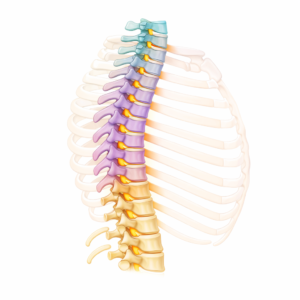
Trauma-induced thoracic pain after a car accident is very common, even when imaging looks “normal.” The thoracic spine (upper back & mid-back) acts as the structural bridge between the neck and the pelvis, and during a crash it absorbs rotational, compressive, and shearing forces from the seatbelt, steering wheel, and rapid body deceleration.
When these forces move through the rib cage and spine, several interconnected structures can become irritated or injured.
What Happens During a Car Accident
During a collision:
• The seatbelt compresses the rib cage
• The torso may twist suddenly
• Breathing mechanics may be disrupted
This can lead to: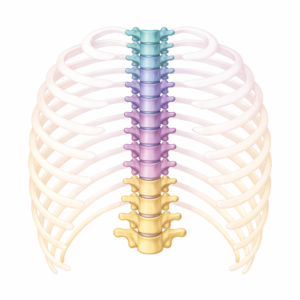
• Rib subluxation or restriction
• Intercostal muscle strain
• Pain when breathing deeply
Many patients describe this pain as sharp, stabbing, or wrapping around the chest or mid-back.
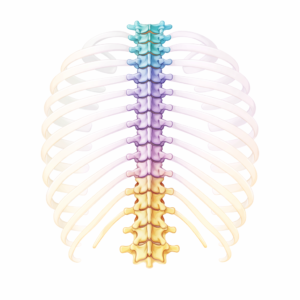
After a car accident these joints can experience:
• Facet joint irritation from sudden hyperflexion or extension
• Joint fixation or misalignment limiting normal movement
• Micro-sprains of spinal ligaments
When these joints become restricted, the body may respond with muscle guarding and inflammation, creating stiffness between the shoulder blades or along the rib cage
What Would Dr. Mary Do?
• Gentle thoracic spinal adjustments
• Rib (costovertebral) mobilization
• Restore joint movement between vertebrae + ribs
• Reduce nerve irritation + muscle guarding
• Gentle Thoracic Chiropractic Adjustments — Restore motion in the thoracic spine (T1–T12) and facet joints
• Rib Mobilization — Reopen movement at the rib joints (costovertebral + costotransverse)
• Physical Therapy — Rebuild healthy movement through thoracic mobility, posture, and scapular support
• Intercostal Release — Relieve tension in the muscles between the ribs to ease breathing and rotation
• Fascial & Muscle Work — Release stored tension in the rhomboids, paraspinals, and surrounding fascia
• Diaphragm Therapy — Restore breath, rib cage expansion, and nervous system balance
• Shockwave Therapy — Break up deep, chronic tension patterns in soft tissue
• Warm Laser Therapy — Support cellular healing and reduce inflammation
Did you know?!!
From a holistic perspective, the thoracic region represents a mechanical, neurological, and emotional hub.
It connects:
• Neck and head
• Shoulders and arms
• Rib cage and breathing
• Heart and lungs
Trauma here may influence:
• breathing mechanics
• posture
• nervous system regulation
• emotional stress patterns
Many patients hold tension in the mid-back during protective or stress responses, especially after accidents.