
THE LOWER CERVICAL AREA
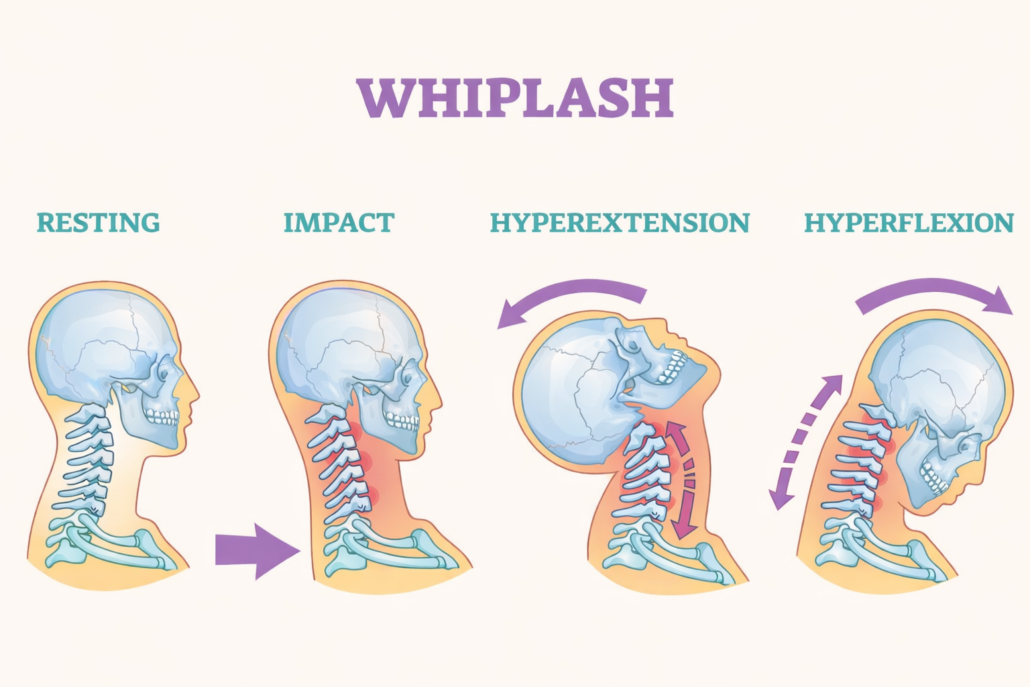
During a collision the head is thrown rapidly:
-
Hyperextension (backward)
-
Hyperflexion (forward)
This rapid motion can occur in less than 300 milliseconds, faster than muscles can protect the neck.
The result may include injury to:
• Cervical ligaments (sprain), which takes 2-3 months to heal
• Muscles and tendons (strain), which takes 4-6 months to heal
• Facet joints
• Intervertebral discs
• Nerves exiting the cervical spine
• Fascia and connective tissue
This is why symptoms often extend beyond just neck pain.
A trauma-induced cervical sprain/strain can involve multiple structures:
1. Ligaments & Tendons
Ligaments stabilize the spine.
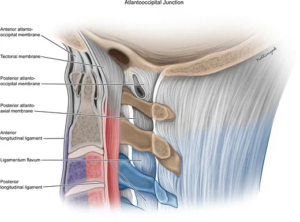
Commonly affected ligaments include:
• Anterior longitudinal ligament
• Posterior longitudinal ligament
• Interspinous ligaments
• Capsular ligaments of the facet joints
Ligament injuries may create micro-instability, causing muscles to guard and tighten.
2. Fascia & Connective Tissue
The body’s fascial system can tighten around injured areas.
Fascial restriction can contribute to:
• Persistent stiffness
• Pain patterns that travel into the shoulders or upper back
• Reduced circulation and healing
3. Muscles
Muscles attempt to protect injured joints by tightening.
Common muscles involved:
• Upper trapezius
• Levator scapulae
• Sternocleidomastoid
• Scalenes
4. Nerves
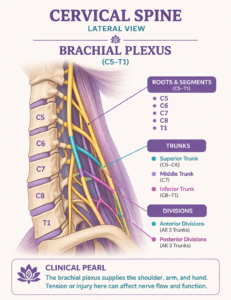
Nerves exiting the cervical spine may become irritated, creating:
• Neck pain
• Shoulder pain
• Arm tingling or numbness
• Dizziness
• Visual disturbances
Upper cervical injuries may also affect the vestibular system and balance centers.
5. Nervous System Response
Car accidents trigger a fight-or-flight response.
The nervous system may remain in a protective state, causing:
• Muscle guarding
• Sensitivity to pain
• Sleep disruption
• Stress hormones slowing healing
This is why addressing the nervous system is essential in recovery.
✨ What Would Dr. Mary Do?
• Calm the nervous system first
→ Craniosacral therapy + breathwork to shift out of protection mode
• Restore gentle motion
→ Specific chiropractic adjustments (especially upper cervical)
• Release muscle guarding
→ Massage + myofascial work (SCM, scalenes, suboccipitals)
• Accelerate healing
→ Shockwave (break adhesions)
→ Warm laser (reduce inflammation + repair tissue)
• Rebuild stability
→ Deep neck strengthening + posture retraining
• Support the whole system
→ Acupuncture + hypnotherapy to regulate pain + stress
💛 The Goal:
• Restore movement
• Rebuild stability
• Reset the nervous system
Did you know?!!
A cervical sprain/strain is not just a mechanical injury.
It involves a network of systems:
• Musculoskeletal
• Neurological
• Fascial
• Emotional stress response
The most effective recovery plans combine structural care with nervous system regulation.
✅ The goal isn’t just reducing pain.
The goal is restoring movement, stability, and nervous system balance.