
Why Holistic Care Helps Your New Year’s Resolutions Finally Stick
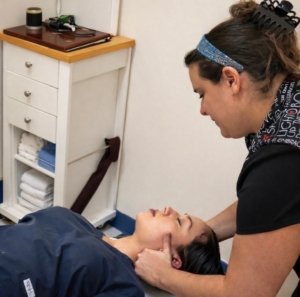
Cervical Chiropractic Adjustment
A Nervous-System-First Approach to Real Change
Every January, we promise ourselves this will be the year.
More energy. Better sleep. Less stress. Healthier habits. Finding balance…
And yet—by February—most resolutions quietly fall apart.
Not because you failed.
Not because you lack discipline.
But because no one taught you how change actually works in the body.
THIS is what I teach my patients everyday: When your nervous system is stuck in survival mode—fight, flight, or freeze—the body prioritizes safety & protection over progress before the higher brain can function. Safety First!
This often shows up as:
Inconsistent motivation
Emotional eating or cravings
Poor sleep
Anxiety or overwhelm
Burnout and frustration
“Knowing what to do” but not being able to follow through
This isn’t a mindset issue. This is biology.
Healing and habit change happen when the body shifts into the parasympathetic nervous system state—the state responsible for rest, repair, digestion, emotional regulation, learning and healing.
Holistic therapies support that shift. So, Let’s get into it!
Chiropractic Care: Align YOUR Hardware That Runs Everything
Chiropractic care isn’t just about backs and necks.
It’s about how your brain communicates with your body and all its parts.
Your vertebral column protects your nervous system. When spinal motion is restricted or stressed, communication becomes distorted—like static on a phone line. In addition to the phone lines being down, the “subluxated” or “pinched” area creates local inflammation, which creates disease over time.
How does chiropractic care help with habit change?
Chiropractic care improves spinal alignment, which supports nervous system communication. This leads to:
Increased energy and focus so you can be successful in your goals
Better sleep and recovery
Reduced physical stress patterns
When your nervous system functions optimally, following new habits becomes easier.
Research published in Spine shows that chiropractic care combined with standard medical care leads to greater reductions in pain and disability than medical care alone—supporting functional improvement and adaptability.
When your nervous system is clear, consistency stops feeling like a fight.
Massage Therapy: Release what YOUR Body Is Holding Onto
Stress doesn’t live only in your thoughts. We all know where this tension lives… in your muscles, fascia, breath, and posture.
Massage therapy releases tension stored in muscles and fascia, which lowers stress hormones and promotes relaxation. Benefits include:
Parasympathetic Activation, which puts the body into a state of healing and restoration.
Reduced anxiety, which decreases cortisol levels in the body.
Improved circulation and mobility.
Enhanced emotional balance, which sparks motivation.
A relaxed body supports consistent routines and healthier choices.
A review published in JAMA Network Open found massage therapy supports short-term improvements in pain, relaxation, and physical function, likely through calming the sympathetic nervous system.
When the body feels supported, change feels safer.
Craniosacral Therapy: Gentle Work, Deep NeuroEmotional Impact
Craniosacral Therapy is an amazing soft tissue therapy which addresses the WHOLE body from inside out, from the dural sac which contains the brain and spinal cord to the fascia which contains the entire body.
Craniosacral therapy works with the body’s natural rhythms to support the central nervous system—especially when stress has been long-standing or emotionally stored. Craniosacral becomes even more powerful, when somatoemotional releases are involved.
Throughout the history of craniosacral, it has been determined that the human body seems to be of two minds. Part of you wants to maintain your status. Reason being life is present and their body is working even though the work may be inefficient and painful. Why take the risk that you may be worst? You hear that all the time, “I’ll live with it. I have lived with it this long” or “the grass is greener on the other side”. Another part of you strives for improvement, because on a subconscious level, you know there may be some beautiful and positive things on the other side. Once these two parts have a craniosacral conversation, THEN we can find resolution, and START to take ACTION on health and wellness journey. Create a healthy lifestyle over just achieving goals. Let’s make those goals MEAN something!
Craniosacral therapy:
Calms an overactive nervous system so you can tune into your feelings and emotions and memories you may subconsciously holding on to.
Improves emotional expression. Once we address the physical restrictions in the neck, throat and mouth, suddenly you are able to find the words.
Supports trauma-informed healing.
Enhances spiritual awareness.
Promotes deep rest and integration.
Research in The Journal of Bodywork and Movement Therapies shows craniosacral therapy is associated with improvements in anxiety, quality of life, and autonomic balance.
This is where the body learns: I’m safe. And safety is the foundation of healing.
Learn more about craniosacral therapy in my holistic Children’s Book, A Craniosacral Story.
Acupuncture: Restoring Balance From the Inside Out
Acupuncture helps balance the body’s energy by stimulating points that influence the nervous system, hormones, digestion, immune function, and emotional balance. It’s not about forcing change—it’s about restoring flow.
Also, for parents and children who have a needle phobia, Acupuncture is a philosophy. The acupuncture points can be stimulated using acupressure (massage), cold laser, warm laser, electrical stimulation, and other physical therapy modalities.
Acupuncture supports:
Stress and anxiety reduction
Hormonal balance
Digestive health
Pain relief
Mental clarity and motivation
Large-scale studies published in Archives of Internal Medicine demonstrate that acupuncture produces clinically meaningful improvements in chronic pain, beyond placebo effects. When the body’s systems are balanced, motivation returns naturally.
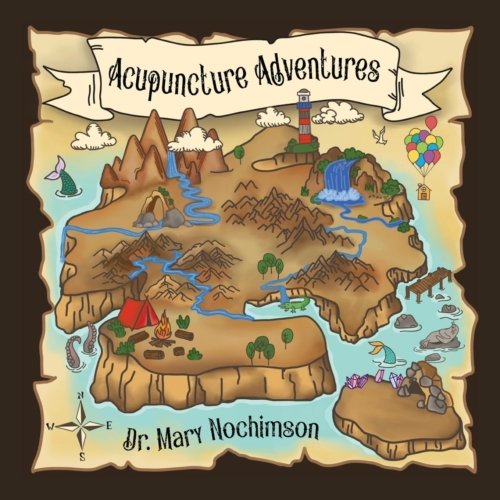
Read my NEWEST edition of the Holistic Modalities collection and learn more about the 5 elements chart and the Riviers of Qi. It’s a great place to start if you are interested in learning more about Acupuncture. Get Acupuncture Adventures on Amazon.
Hypnotherapy: Where Real Change Begins
Your conscious mind sets goals, but Your subconscious mind runs your habits.95-99% of your actions stem from behaviors learned within your subconscious mine. That’s why willpower doesn’t work alone.
By calming the mind with guided meditations, Hypnotherapy supports gentle, focused access to the subconscious—where beliefs, patterns, and emotional responses live.
Hypnotherapy can help with:
Habit change
Stress and Fears
Confidence and self-worth
Sleep support
Focus and performance
A meta-analysis published in The International Journal of Clinical and Experimental Hypnosis shows hypnotherapy is effective for behavior change and stress reduction, especially when paired with relaxation and imagery.
When the mind feels safe, change becomes automatic.
The Real Secret to Sustainable New Year Success
Your body doesn’t need more pressure. It needs support – physically, emotionally, and spiritually.
When the mind, the nervous system, and the meridians are aligned and balanced, you may feel your:
Motivation increase
Habits stabilize
Healing accelerate
Sleep improve
Emotional resilience strengthen
This is why holistic, integrative care isn’t a trend—it’s a return to how the body was designed to heal.
If This Is the Year You Want Change to Last…
Start by supporting the system that runs everything.
✨ Regulate first.
✨ Align second.
✨ Watch everything else follow.
Your goals aren’t too big.
Your body just needs the right support.
References (Research-Backed)
Cherkin, D. C., et al. (2018). Effect of usual medical care plus chiropractic care vs usual medical care alone on pain and disability. Spine, 43(11), 807–815.
Furlan, A. D., et al. (2015). Massage for low-back pain. Cochrane Database of Systematic Reviews.
Castro-Sánchez, A. M., et al. (2016). Effects of craniosacral therapy on anxiety and quality of life. Journal of Bodywork and Movement Therapies, 20(2), 422–430.
Vickers, A. J., et al. (2012). Acupuncture for chronic pain: Meta-analysis. Archives of Internal Medicine, 172(19), 1444–1453.
Lynn, S. J., et al. (2010). Hypnosis and behavior change. International Journal of Clinical and Experimental Hypnosis, 58(4), 373–398.
